.svg)


Policy enforcement is only effective when teams understand the policy, know when it applies, and have a clear process for following it.
Many organizations create strong cloud governance policies but struggle during rollout because requirements are unclear, communication is limited, or enforcement happens too quickly.
A policy rollout checklist helps organizations introduce new governance controls in a structured way.
It gives platform, security, operations, and compliance teams a framework for improving adoption, reducing friction, and enforcing cloud governance policies consistently across cloud environments.
Why Policy Rollouts Matter
Cloud policies often affect multiple teams, environments, and workflows.
Examples include:
- Security requirements
- Infrastructure standards
- Resource tagging rules
- Cost controls
- Access management policies
- Deployment approval requirements
- Compliance-related controls
When policies are introduced without a clear rollout plan, teams may not understand what is changing, why the policy matters, or how to comply.
Poor rollouts often lead to:
- Policy violations
- Delayed deployments
- Increased support requests
- Inconsistent enforcement
- Shadow processes outside approved workflows
- Resistance from engineering teams
A structured rollout process helps organizations reduce these risks and improve policy adoption.
What a Policy Rollout Should Include
A strong policy rollout should include:
- Clear policy definitions
- Scope and applicability
- Team communication
- Training and documentation
- Rollout timelines
- Enforcement stages
- Exception handling
- Ongoing measurement and review
Without these elements, policies can become difficult to enforce and maintain.
The Policy Rollout Checklist
Use the checklist below to evaluate whether your organization is prepared to roll out new cloud governance policies.
Define the Policy Clearly
Every policy should have a precise definition.
Teams should understand:
- What the policy requires
- Why the policy exists
- Which systems or environments are affected
- Which teams are responsible
- What actions are allowed or restricted
Avoid vague policy language that can be interpreted differently across teams.
Identify Which Teams Are Affected
Policies rarely apply to everyone in the same way.
Organizations should identify:
- Platform teams
- Security teams
- Development teams
- Compliance teams
- Finance teams
- Operations teams
Understanding which teams are affected helps organizations provide the right communication and support.
Define Where the Policy Applies
Policies should clearly state which environments, accounts, or services are included.
This may include:
- Production environments
- Shared infrastructure
- Regulated workloads
- Specific cloud providers
- Identity and access systems
- High-cost resources
Clear scope prevents confusion and inconsistent enforcement.
Communicate the Policy Early
Teams should know about upcoming policies before enforcement begins.
Communication should explain:
- What is changing
- Why the change is necessary
- When enforcement will begin
- How teams can prepare
- Where to find documentation
Early communication gives teams time to adjust workflows and resolve potential issues.
Provide Training and Documentation
Teams are more likely to follow policies when they understand how to comply.
Organizations should provide:
- Written policy documentation
- Training sessions
- Frequently asked questions
- Examples of compliant and non-compliant behavior
- Step-by-step workflow guidance
Training helps reduce confusion and improve adoption.
Start With Monitoring Before Enforcement
Immediate enforcement can create friction if teams are not ready.
Organizations should consider phased rollouts such as:
- Monitoring only
- Warning notifications
- Limited enforcement for high-risk actions
- Full enforcement after teams are prepared
A gradual rollout gives teams time to adjust.
Define Exception Handling Processes
Some teams may need temporary exceptions.
Organizations should define:
- Who can request an exception
- What information is required
- Who approves the request
- How long the exception remains active
- When the exception should be reviewed
Exception processes help maintain flexibility without weakening governance.
Assign Ownership for Enforcement
Every policy should have a clear owner.
Ownership should define:
- Who maintains the policy
- Who reviews violations
- Who answers team questions
- Who approves exceptions
- Who monitors enforcement results
Without ownership, policies may become outdated or inconsistently applied.
Track Policy Violations
Organizations should monitor how often policies are violated.
Important metrics may include:
- Number of violations by team
- Most common violation types
- Repeat violations
- Delayed remediation timelines
- Exception request frequency
Violation tracking helps organizations improve both the policy and the rollout process.
Review Policy Effectiveness Regularly
Policies should evolve over time.
Organizations should review:
- Whether the policy still matches current risk
- Whether teams understand the requirements
- Whether enforcement is creating unnecessary delays
- Whether exceptions are being overused
- Whether automation can improve enforcement
Regular reviews help ensure policies remain useful and relevant.
Common Policy Rollout Mistakes
Many organizations make the mistake of enforcing new policies too quickly.
Without enough communication, training, or preparation, teams may see the policy as a blocker rather than a useful governance control.
Another common mistake is creating policies without defining ownership. Policies often fail when no team is responsible for maintaining them or answering questions.
Organizations also sometimes create overly broad policies that apply to every environment in the same way. In practice, high-risk production systems often require stronger controls than lower-risk development environments.
Finally, some organizations fail to review policies after rollout. Over time, outdated policies may create unnecessary operational overhead.
Best Practices for Successful Policy Rollouts
Organizations can improve policy rollouts by following several best practices.
Keep Policies Simple
Teams are more likely to follow policies when the rules are easy to understand.
Use Phased Enforcement
Gradual enforcement helps reduce friction and gives teams time to adapt.
Combine Documentation With Training
Written guidance is important, but training sessions and examples often improve adoption.
Measure Adoption and Violations
Tracking policy usage helps organizations identify where support or adjustments are needed.
Review Policies Regularly
Policies should evolve as cloud environments, teams, and business priorities change.
Conclusion
A policy rollout checklist helps organizations introduce cloud governance controls in a structured and consistent way.
It improves communication, reduces confusion, and helps teams adopt new requirements more effectively.
For organizations focused on cloud governance and risk management, strong policy rollouts are essential for improving security, compliance, cost control, and operational consistency.
Successful policy enforcement is not only about creating rules. It is about making those rules practical, understandable, and sustainable across the organization.
FAQs
What is a policy rollout?
A policy rollout is the process of introducing a new governance rule, communicating it to teams, and enforcing it across cloud environments.
Why are policy rollouts important?
Policy rollouts are important because they help teams understand new requirements, reduce confusion, and improve policy adoption.
What should be included in a policy rollout?
A policy rollout should include communication, training, documentation, enforcement timelines, exception handling, and ownership.
How can organizations improve policy rollout success?
Organizations can improve rollout success by communicating early, using phased enforcement, providing training, and reviewing policy effectiveness regularly.

Related Content
IaC Self-Service Enablement Guide: Templates, Guardrails, and Golden Paths for Developer Teams
OpenTofu Adoption Guide: State Encryption, Provider for_each, and Features Terraform Doesn't Have

How to Install Terragrunt and Set Up Your First Multi-Environment Project (2026 Edition)
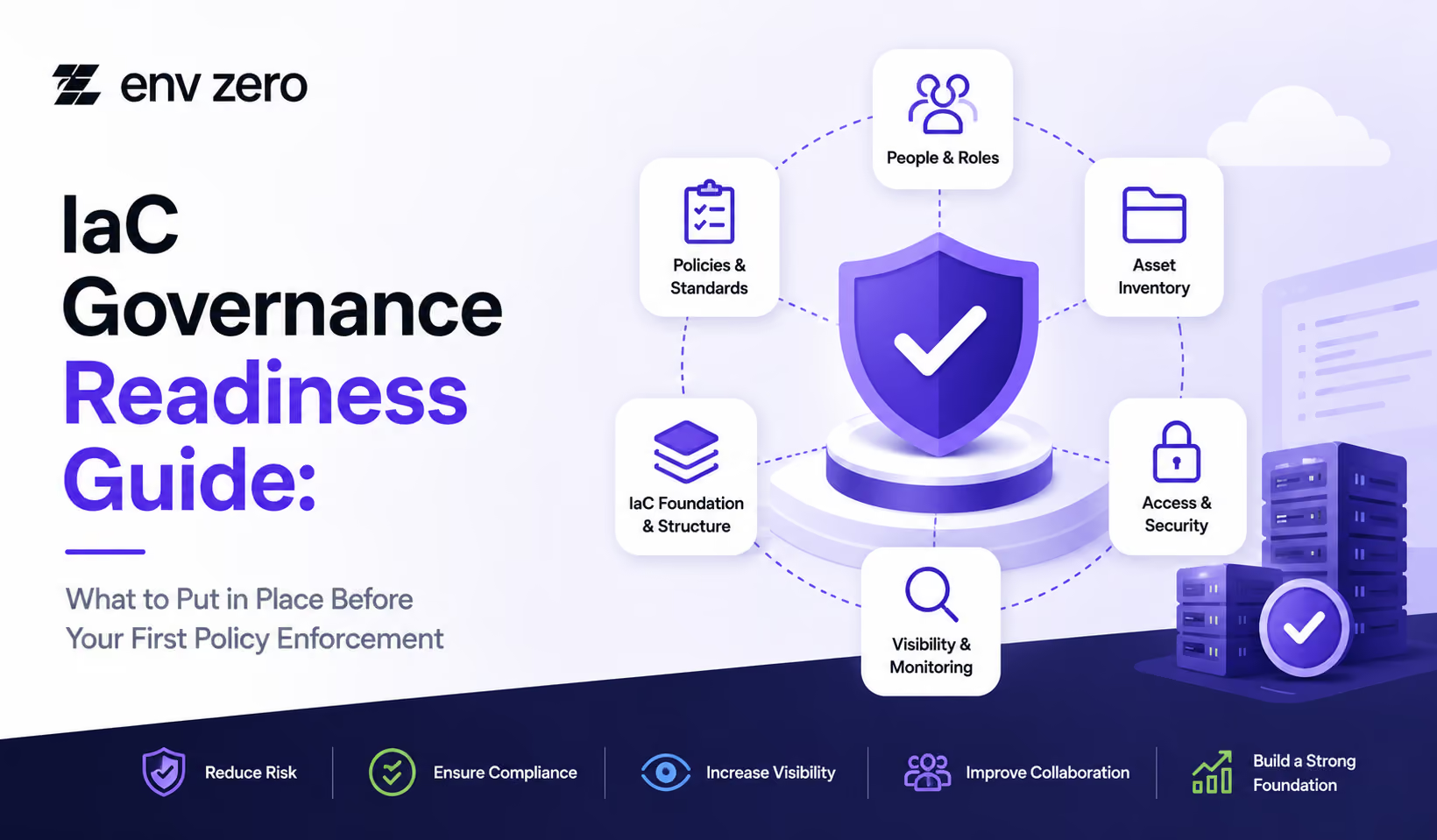
IaC Governance Readiness Guide: What to Put in Place Before Your First Policy Enforcement
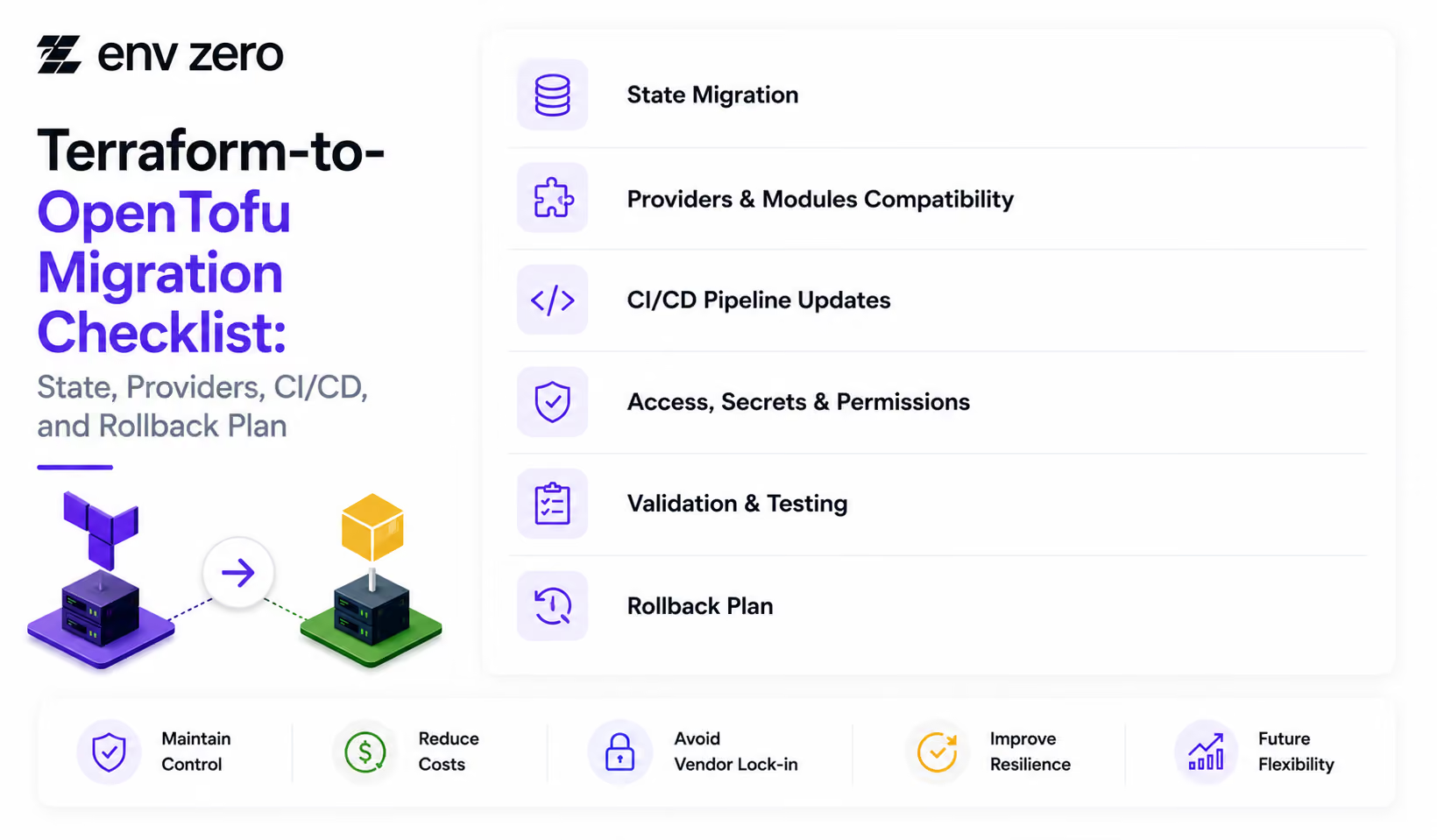
Terraform-to-OpenTofu Migration Checklist: State, Providers, CI/CD, and Rollback Plan















Audit Trail Setup Guide: Maintaining Compliance and Security Across Your Infrastructure


Pipeline Visibility Checklist: Ensuring Full Transparency Across Deployment Workflows


Rollback Readiness Checklist: Ensuring Fast and Reliable Recovery Across Environments

Deployment Automation Checklist: Ensuring Consistent and Reliable Infrastructure Delivery