.svg)


Approval policies are a core part of cloud governance, but poor approval design often creates delays, manual bottlenecks, and developer frustration.
An effective approval model should reduce risk without slowing delivery. It should clearly define when approval is required, who is responsible, what triggers review, and how low-risk changes can move faster.
An approval design checklist helps platform and security teams create approval policies that are consistent, auditable, and aligned with enterprise infrastructure workflows.
Why Approval Design Matters in Cloud Governance
Approval processes often begin with good intentions, such as adding oversight for production changes, security reviews, and high-cost infrastructure actions.
However, approval layers can become inconsistent as new exceptions and team-specific workflows are added.
This often creates three problems: approvals become too broad, too unclear, and too difficult to audit.
A well-designed approval framework helps solve these issues by making approval policies more consistent, scalable, and easier to enforce.
What an Approval Policy should Actually do
An approval policy should not slow delivery unnecessarily. It should act as a targeted control tied to risk, cost, compliance, or operational impact.
A strong approval policy should clearly define what change is being reviewed, what makes it sensitive, who can approve it, what context is required, and what happens if the request is delayed or denied.
Without clear rules, approvals become inconsistent and difficult to manage.
Subjective governance is difficult to automate, difficult to audit, and difficult to maintain across multiple teams and environments.
The Approval Design Checklist
Use the checklist below to evaluate whether your approval policies are structured for enterprise use.
Define the Exact Trigger for Approval
Every approval policy should have a precise trigger. Avoid vague rules such as “important infrastructure changes” or “sensitive deployments.” Instead, define objective conditions.
Examples include:
- Deployment to production
- Changes affecting shared environments
- Creation of resources above a cost threshold
- Policy violations requiring exception handling
- Changes to identity, network, or security controls
If teams cannot tell when the rule applies, they will either overuse approvals or bypass them.
Align Approvals to Risk Level
Not every action needs the same level of oversight. Low-risk changes should move through automated workflows, while higher-risk actions may require human review.
A mature approval design separates actions by risk category, such as:
- Low risk: standard, pre-approved actions
- Medium risk: actions with limited operational or financial impact
- High risk: production, security, compliance, or high-cost changes
This prevents approval fatigue and keeps reviewers focused on decisions that actually matter.
Identify the Right Approver
Approvals fail when the wrong person is placed in the loop. The approver should be someone with both authority and context.
Depending on the use case, that may be:
- A platform team lead
- A security reviewer
- A finance owner for cost-heavy resources
- An application owner for service-specific changes
- A compliance stakeholder for regulated workloads
Avoid approval chains that include multiple people without a clear reason. More reviewers do not always create better governance.
Require the Right Supporting Context
Approvals should be informed, not symbolic. Reviewers need enough information to make a clear decision without hunting through tickets, chat threads, or separate dashboards.
At minimum, a request should include: What is changing
- Which environment is affected
- Why the change is needed
- Expected impact
- Relevant policy conditions
- Rollback or remediation considerations, when applicable
Better context improves approval quality and reduces back-and-forth delays.
Set Time Expectations and Escalation Paths
A policy is incomplete if it does not define what happens when an approval sits unresolved.
This is especially important for infrastructure teams operating across time zones, business units, or on-call workflows.
Your approval model should define:
- Expected response time
- Escalation path for urgent requests
- Alternate approvers when the primary reviewer is unavailable
- Rules for emergency changes
Without these guardrails, approvals can become delivery blockers even when the policy itself is reasonable.
Make Approvals Auditable
Approval policies should create a clear record of governance decisions. That means logging the trigger, the request details, the approver, the decision, and the timestamp.
Auditability matters for more than compliance. It also helps platform teams answer operational questions such as:
- Which approvals are slowing delivery?
- Which teams generate the most exceptions?
- Which policies are triggered most often?
- Where are manual approvals still replacing automation?
If approval decisions are not visible, they cannot be improved. Minimize manual approvals where automation is possible
The best approval design does not maximize approvals. It minimizes unnecessary ones.
As teams mature, many manual reviews can be replaced with policy-based automation for standard actions.
For example, pre-approved deployment patterns, budget-aware provisioning rules, and environment-specific access controls can reduce review volume without weakening governance.
The goal is not approval for its own sake. The goal is controlled delivery.
Review and refine approval policies regularly
Approval policies should evolve with the platform. As environments, teams, and risk models change, approval rules should be reviewed for relevance.
A quarterly or semi-annual review can help identify:
- Policies that no longer reflect current risk
- Approval steps that duplicate existing controls
- Manual reviews that could be automated
- New governance requirements that need coverage
Governance debt builds quietly. Regular review prevents outdated approval logic from becoming permanent process overhead.
Common Approval Policy Mistakes
Many enterprises face the same approval design issues.
One common mistake is tying approvals to specific teams instead of clear conditions, which creates inconsistency across business units.
Another issue is relying on manual approvals when governance policies are unclear. While this may work temporarily, it does not scale.
Teams also run into problems when approvals are disconnected from platform workflows, leading to scattered tickets, emails, and chat messages that reduce both speed and traceability.
Building Approval Policies that Scale
Approval policies should be part of a broader cloud governance model.
They need to support risk-based decisions, fit naturally into infrastructure workflows, and create an audit trail without slowing delivery.
The goal is balance. Too few approvals increase risk, while too many create bottlenecks and reduce platform speed. The most effective approval policies are intentional, policy-driven, and based on clearly defined conditions.
Conclusion
Approval policies should strengthen governance without creating unnecessary friction.
Clear approval triggers, defined reviewers, proper context, and built-in auditability help organizations apply oversight where it matters most.
For enterprise teams, approval design is a foundational part of cloud governance and risk management.
A structured checklist makes approval policies easier to scale, improve, and maintain over time.
FAQs
Why are approval policies important in cloud governance?
Approval policies help organizations control sensitive infrastructure changes, reduce risk, and maintain compliance across teams and environments.
What should trigger an approval request?
Approval requests should be triggered by clear conditions such as production deployments, security-related changes, or high-cost resource creation.
How can teams reduce approval bottlenecks?
Teams can reduce bottlenecks by automating low-risk approvals, defining clear approval rules, and assigning the right reviewers.
Why is auditability important for approval policies?
Auditability creates a record of who approved a change, why it was approved, and when it happened, which supports compliance and operational visibility.
Related Content
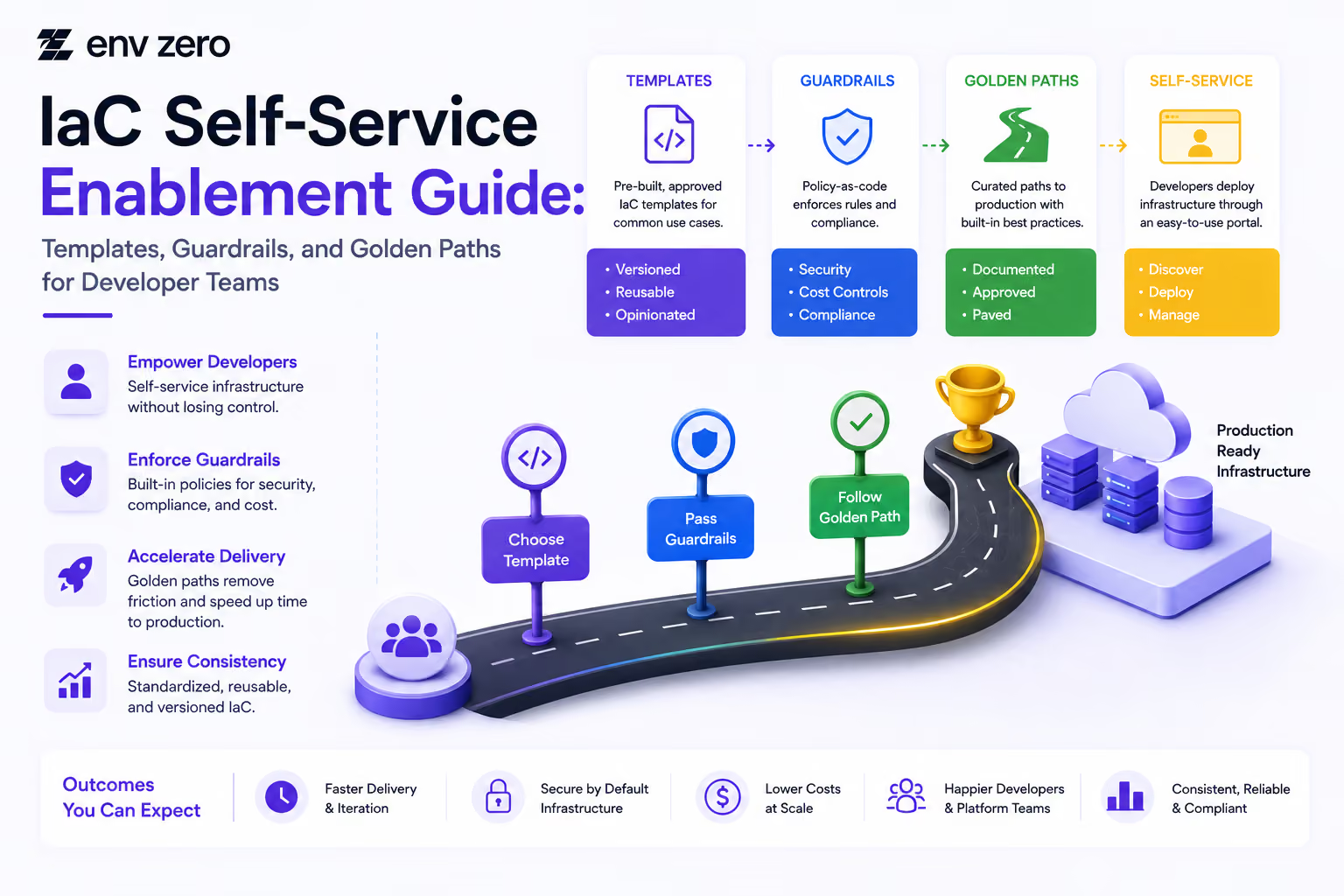
IaC Self-Service Enablement Guide: Templates, Guardrails, and Golden Paths for Developer Teams
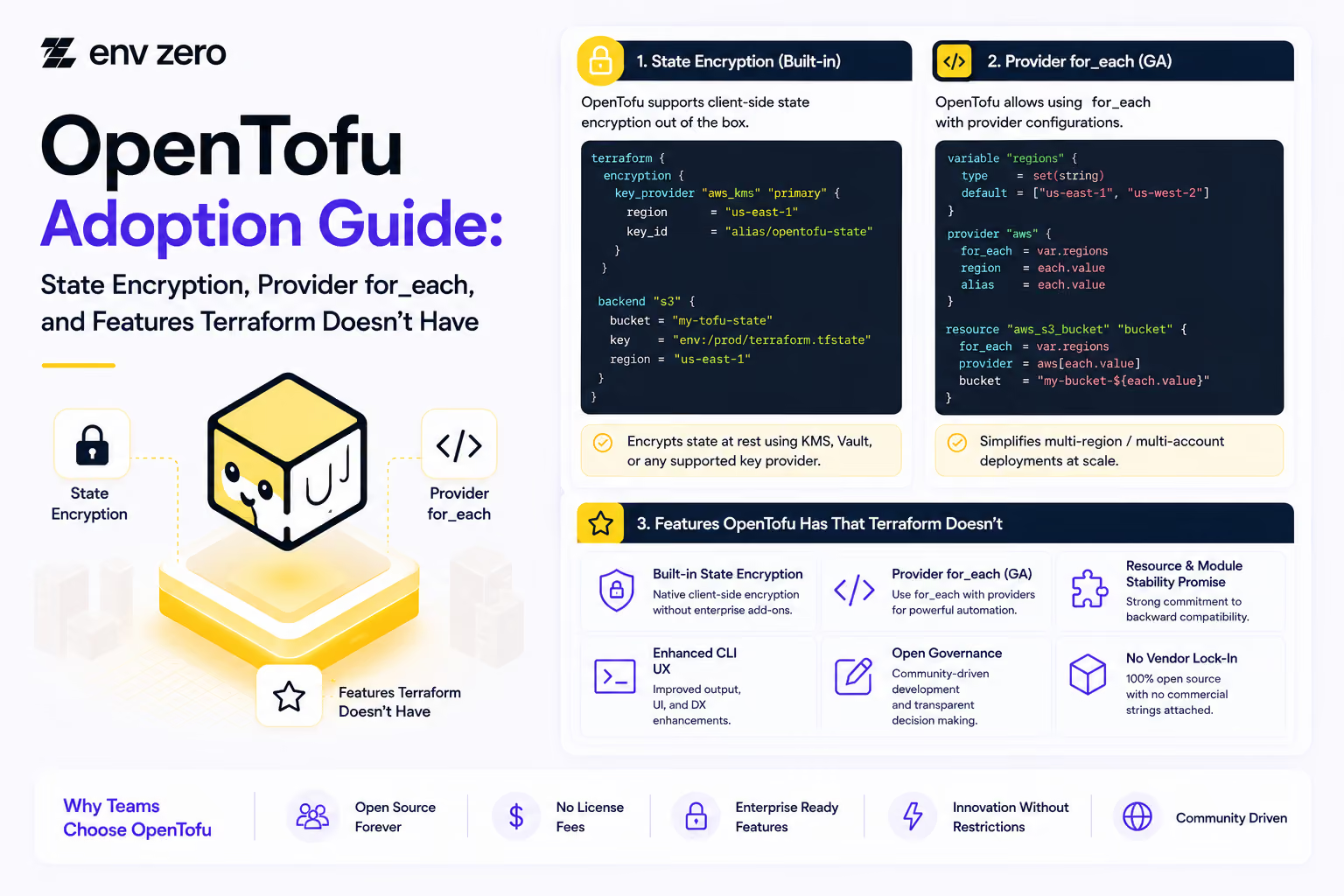
OpenTofu Adoption Guide: State Encryption, Provider for_each, and Features Terraform Doesn't Have
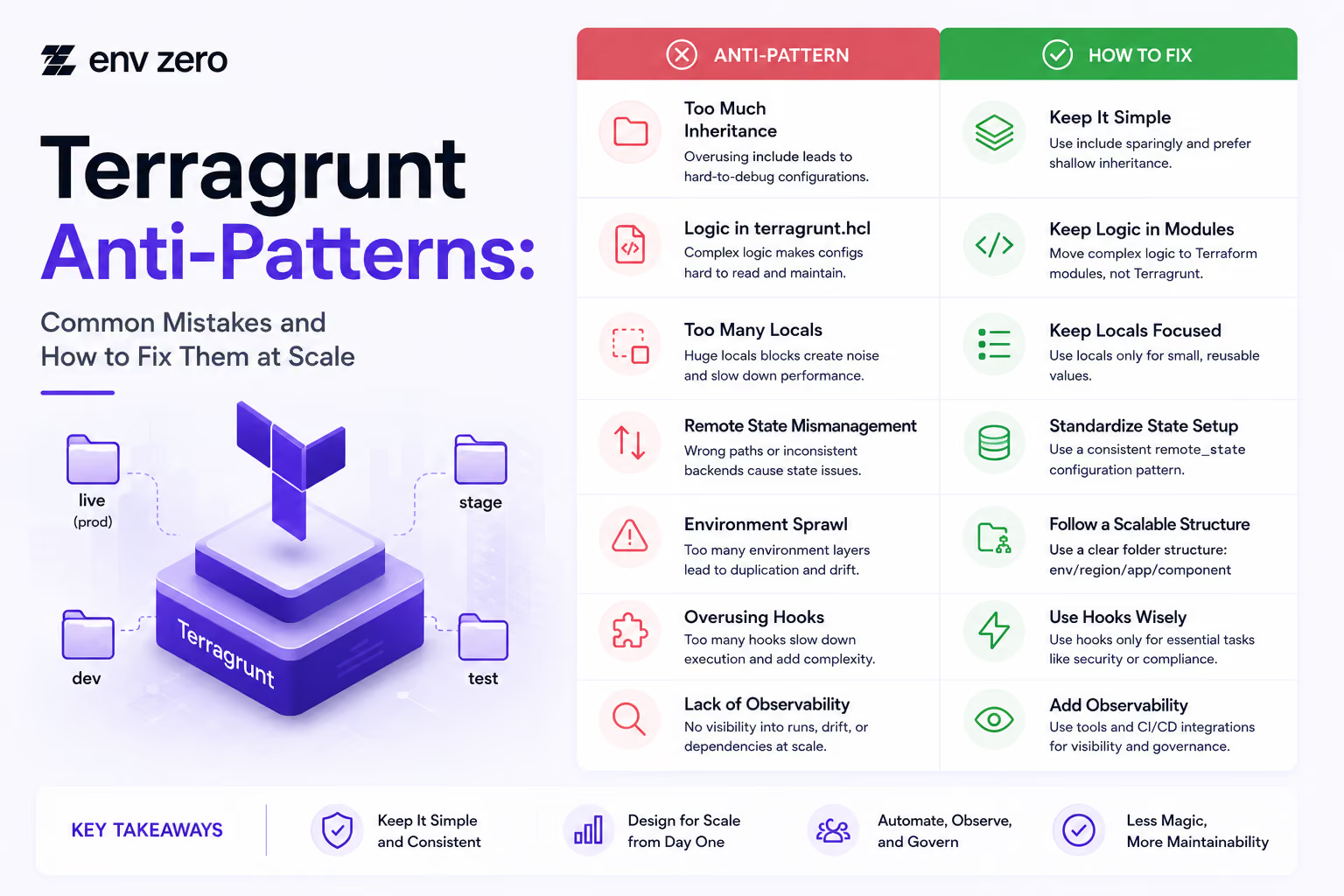

How to Install Terragrunt and Set Up Your First Multi-Environment Project (2026 Edition)
IaC Governance Readiness Guide: What to Put in Place Before Your First Policy Enforcement
Terraform-to-OpenTofu Migration Checklist: State, Providers, CI/CD, and Rollback Plan













Audit Trail Setup Guide: Maintaining Compliance and Security Across Your Infrastructure


Pipeline Visibility Checklist: Ensuring Full Transparency Across Deployment Workflows

Rollback Readiness Checklist: Ensuring Fast and Reliable Recovery Across Environments
Deployment Automation Checklist: Ensuring Consistent and Reliable Infrastructure Delivery