.svg)

As organizations scale their infrastructure operations, the challenge shifts from simply provisioning resources to delivering them in a consistent, governed, and developer-friendly way. Without structure, infrastructure requests become fragmented, approvals become inconsistent, and platform teams struggle to maintain control while enabling speed.
An internal infrastructure service catalog solves this by acting as the interface between platform teams and developers. It transforms infrastructure into a set of standardized, self-service offerings that developers can consume easily, while ensuring that every action follows predefined policies, templates, and approval workflows.
Why Service Catalogs Are Essential for Platform Engineering
Modern platform engineering isn't just about automation. It's about creating systems that scale reliably across teams. Without a service catalog, developers often rely on:
- Ad hoc requests
- Manual configurations
- Tribal knowledge
- Inconsistent environments
This leads to operational inefficiencies, configuration drift, and increased risk. A service catalog introduces structure by providing a single source of truth for infrastructure provisioning, ensuring that every request aligns with organizational standards while reducing errors and improving speed. More importantly, it lets platform teams shift from reactive support to proactive enablement.
Service catalogs are typically one component of a broader operating model; see the Golden Path Operating Model.
Core Components of a Service Catalog Framework
An effective service catalog framework isn't just a list of services. It's a structured system designed to balance usability and governance:
- Standardized infrastructure templates. These define how resources are provisioned, ensuring consistency across environments. Each template is pre-approved and aligned with security and compliance policies. (How templates are created, validated, and versioned over time is covered in the Infrastructure Template Lifecycle Framework.)
- The service layer. This sits on top of templates and presents them as consumable offerings, so developers interact with services rather than raw infrastructure.
- Policy guardrails. These enforce rules automatically, ensuring requests comply with organizational requirements without constant manual oversight.
- Approval workflows. These are integrated into the catalog so certain requests get reviewed when necessary, applying governance selectively without slowing down routine actions.
- Visibility and auditability. Every request, change, and approval should be tracked, providing transparency and supporting compliance efforts.
Together, these components create a foundation for self-service infrastructure with guardrails, letting developers provision resources independently without compromising organizational standards.
Designing a Developer-Friendly Catalog Experience
The success of a service catalog depends heavily on adoption. If developers find it difficult to use, they'll bypass it, defeating its purpose. A well-designed catalog focuses on simplicity and clarity: services should be clearly defined, with intuitive naming and minimal required inputs, so developers understand what each service does and when to use it without needing extensive documentation.
The catalog should also provide feedback during the provisioning process, giving developers visibility into the status of their requests, including approvals, errors, and completion. By prioritizing usability, platform teams can make the catalog the default interface for infrastructure rather than an optional tool.
Balancing Standardization and Flexibility
One of the biggest challenges in building a service catalog is balancing standardization with flexibility. Too much standardization can limit developer autonomy, forcing teams to work around the system, while too much flexibility can lead to inconsistency and increased risk.
A strong framework achieves balance by offering opinionated defaults with controlled customization: developers can use predefined templates while still adjusting parameters within approved boundaries. This keeps infrastructure consistent while still accommodating diverse use cases.
Integrating Service Catalogs with Self-Service Infrastructure
A service catalog is most effective when integrated with self-service infrastructure systems. Instead of submitting tickets or requesting resources manually, developers can provision infrastructure directly through the catalog, while the system handles validation, policy enforcement, and approvals automatically.
This integration eliminates friction and accelerates delivery cycles: developers move quickly while platform teams maintain control over the underlying infrastructure. It also creates a unified workflow where all infrastructure actions are centralized, making it easier to manage and scale operations.
How Service Catalogs Improve Infrastructure Governance
Governance is often seen as a barrier to speed, but a well-implemented service catalog turns it into an enabler. By embedding policies into templates and workflows, the catalog applies governance consistently, enabling standardized workflows across teams that reduce the risk of misconfigurations, security vulnerabilities, and compliance violations.
At the same time, governance becomes more efficient. Instead of reviewing every request manually, platform teams can focus on exceptions and high-risk scenarios.
Measuring the Impact of a Service Catalog
The effectiveness of a service catalog can be measured through several key indicators:
- Deployment speed. One of the most visible outcomes: developers can provision resources quickly without waiting for approvals or manual intervention.
- Consistency across environments. Standardized templates reduce variability, leading to more reliable systems.
- Operational efficiency. Platform teams spend less time handling routine requests and more time on strategic initiatives.
- Adoption rates. A high adoption rate indicates that developers trust and rely on the system.
Common Challenges in Service Catalog Implementation
While service catalogs offer significant benefits, implementing them isn't without challenges:
- Overcomplication. If the catalog includes too many services or overly complex options, it becomes difficult to use.
- Lack of alignment between platform teams and developers. Without clear communication, the catalog may not meet the needs of its users.
- Resistance to change. Developers used to existing workflows may be hesitant to switch to a new system.
Addressing these challenges requires careful planning, clear communication, and a focus on user experience.
How env zero Enables Service Catalog Frameworks
Building and maintaining a service catalog requires a platform that can unify templates, policies, approvals, and workflows into a single system.
env zero enables organizations to create and manage infrastructure service catalogs with built-in governance. Platform teams can define reusable templates, enforce policies, and integrate approval workflows, all within a centralized platform. Developers can provision infrastructure on demand through a consistent interface, while platform teams maintain full visibility and control. This lets organizations scale infrastructure delivery without sacrificing governance or efficiency.
For a more approachable walkthrough of this same idea, see Why Internal Service Catalogs Improve Infrastructure Delivery.
Conclusion
An internal infrastructure service catalog is a foundational component of modern platform engineering. It provides the structure needed to deliver infrastructure consistently, efficiently, and securely. By combining standardized templates, policy enforcement, and self-service workflows, organizations can create a system that supports both developer autonomy and platform control.
As infrastructure environments continue to grow in complexity, a well-designed service catalog becomes essential for maintaining scalability and reliability. If your infrastructure workflows are fragmented or difficult to scale, it's time to implement a service catalog framework. With env zero, you can standardize infrastructure delivery, enable self-service provisioning, and maintain governance, all from a single platform.
FAQs
What is an internal infrastructure service catalog?
An internal infrastructure service catalog is a centralized platform where developers can access and provision pre-approved infrastructure services. It standardizes resource delivery while ensuring compliance, consistency, and efficiency.
How does a service catalog support self-service infrastructure?
A service catalog enables self-service by allowing developers to provision infrastructure through predefined templates without manual intervention. Policies and approvals are applied automatically within the workflow.
What are the main components of a service catalog?
Key components include infrastructure templates, service definitions, policy guardrails, approval workflows, and audit logs. Together, these elements create a structured and scalable system for infrastructure delivery.
Why are service catalogs important for platform engineering?
Service catalogs provide a standardized interface for infrastructure provisioning, reducing complexity and improving consistency. They help platform teams scale operations while maintaining governance.
How do service catalogs improve governance?
Governance is embedded into templates and workflows, ensuring that all infrastructure requests comply with policies automatically. This reduces the need for manual oversight and minimizes risk.
What challenges do organizations face when implementing service catalogs?
Common challenges include overcomplication, lack of alignment between teams, and resistance to change. Addressing these issues requires clear design, communication, and user-focused implementation.
Can service catalogs improve deployment speed?
Yes, by eliminating manual processes and standardizing workflows, service catalogs enable faster provisioning and deployment of infrastructure resources.
How do service catalogs balance flexibility and control?
They provide predefined templates with configurable parameters, allowing developers to customize resources within approved limits while maintaining consistency and compliance.
What role do templates play in service catalogs?
Templates define how infrastructure is provisioned and ensure consistency across environments. They act as the foundation for all services within the catalog.
How does env zero support service catalog implementation?
env zero provides tools for creating reusable templates, enforcing policies, and integrating approval workflows. This allows organizations to build scalable service catalogs with built-in governance.

Related Content

Pulumi vs Terraform vs OpenTofu: A Decision Framework Based on Team Type, Scale, and License Risk


Terragrunt Directory Structure Framework: DRY Configs Across Dev, Staging, and Prod
Self-Service IaC Platform Framework: Guardrails, Templates, and Approval Workflows
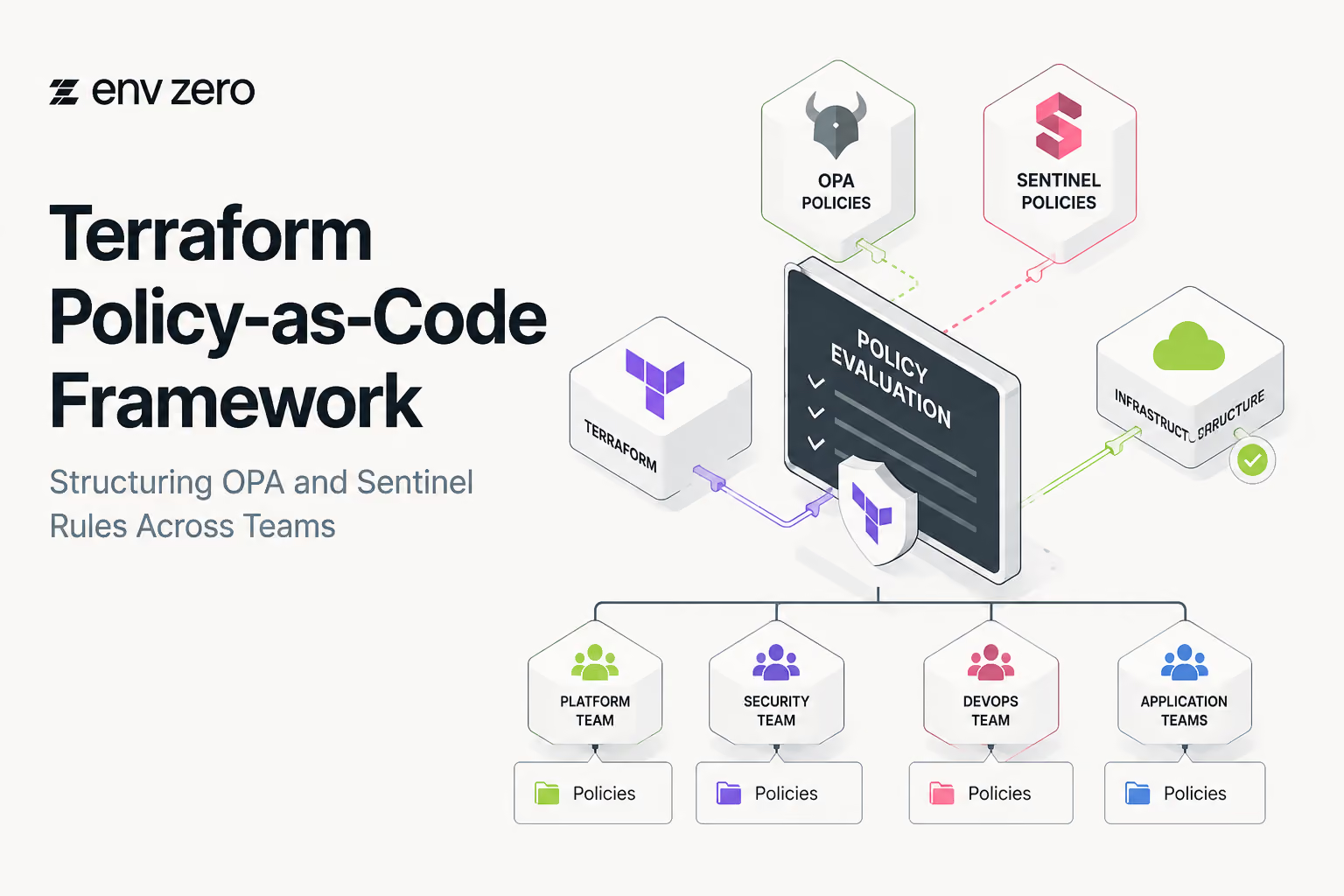
Terraform Policy-as-Code Framework: Structuring OPA and Sentinel Rules Across Teams
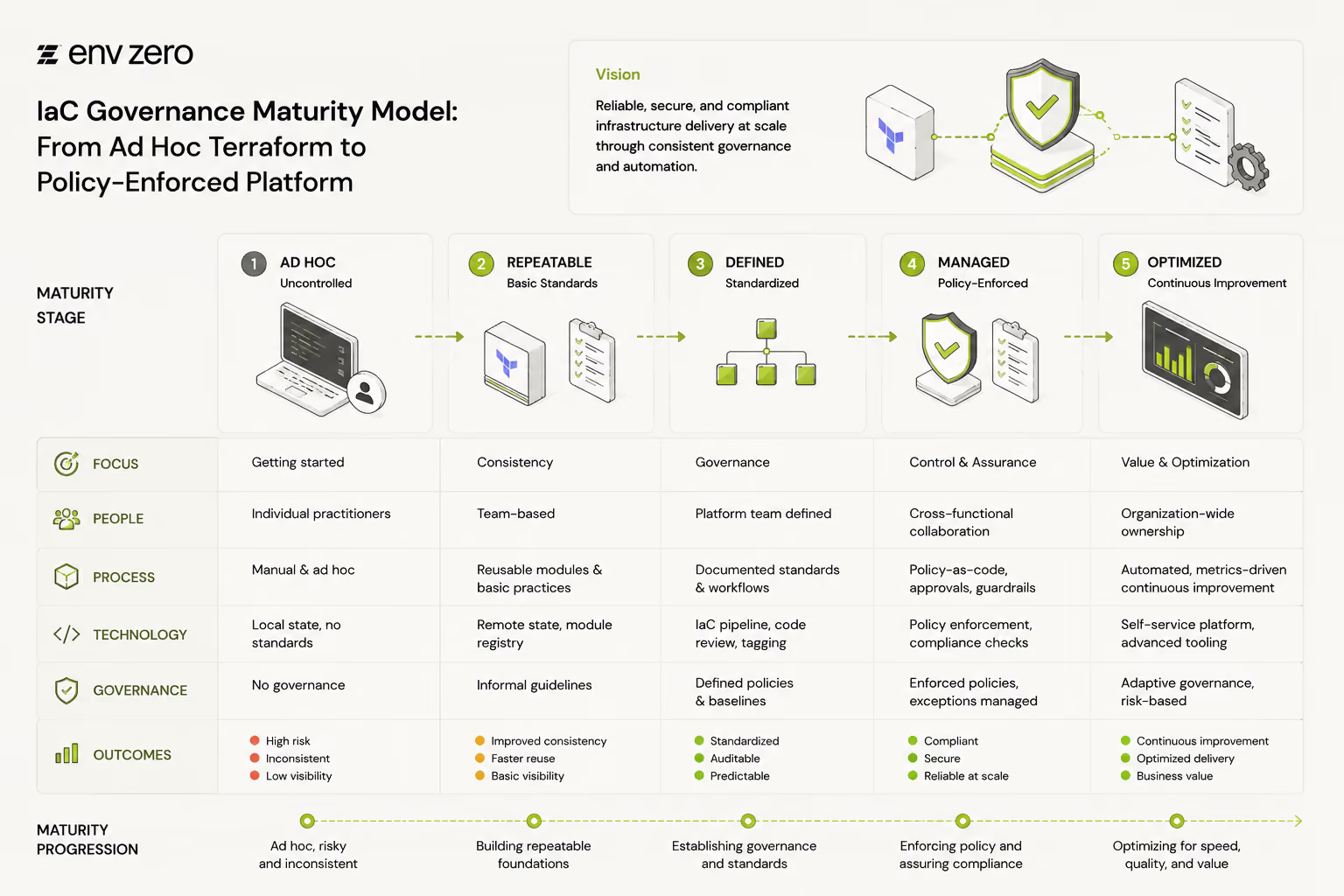
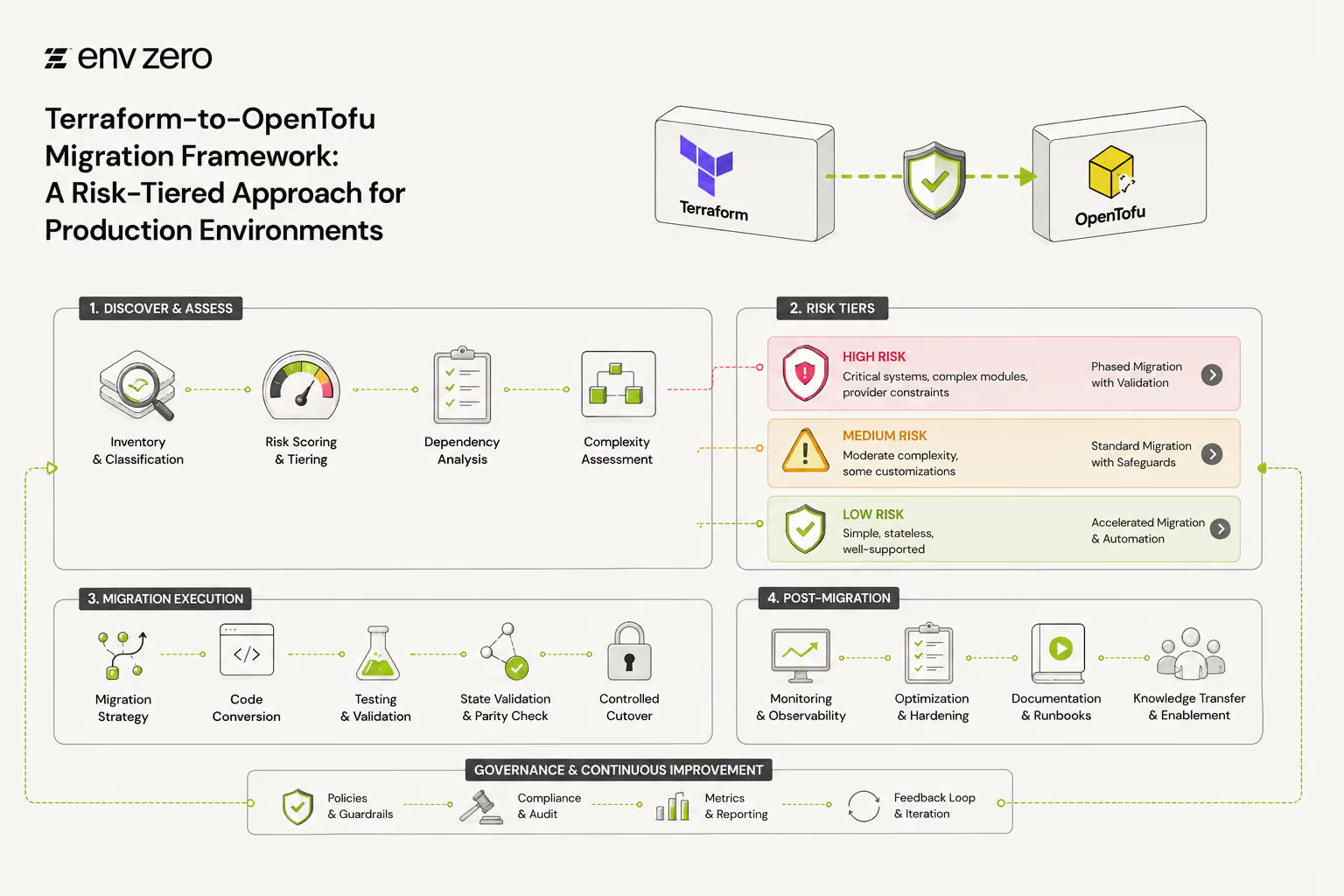
Terraform-to-OpenTofu Migration Framework: A Risk-Tiered Approach for Production Environments
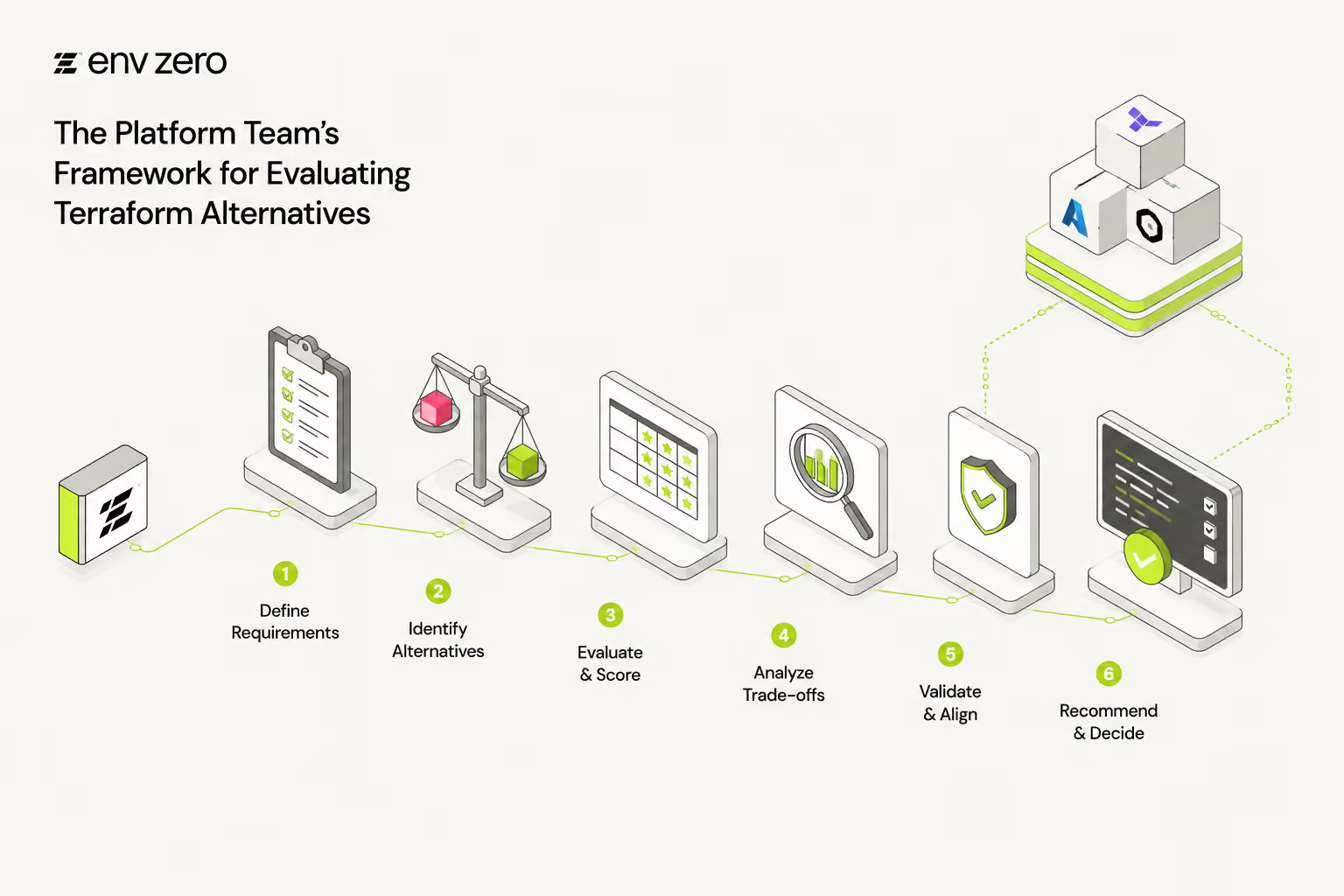









Enterprise Release Control Model: Structuring Secure and Scalable Deployment Workflows

Policy Checkpoint Framework: Enforcing Consistent and Scalable Governance Across Deployments

Audit Trail Governance Framework: Ensuring Transparency, Compliance, and Accountability Across Infrastructure
Release Governance Framework: Structuring Controlled and Compliant Infrastructure Releases

Environment Drift Detection Model: Maintaining Consistency Across Infrastructure Environments
Pipeline Visibility Framework: Structuring Transparent and Controlled Deployment Workflows