.svg)


Developer autonomy has become a central goal in modern platform engineering. Organizations want developers to move faster, provision infrastructure independently, and deliver value without being blocked by manual processes. However, achieving autonomy at scale isn't as simple as removing controls or introducing self-service tools.
Without structure, autonomy can lead to inconsistency, security risks, and operational inefficiencies. The real challenge isn't enabling autonomy, it's managing it. This is where a developer autonomy maturity model becomes essential.
A maturity model provides a clear framework for understanding how autonomy evolves within an organization. It helps platform teams move from reactive, manual workflows to scalable, policy-driven systems that balance independence with governance, and more importantly, it provides a roadmap for continuous improvement.
Why Developer Autonomy Needs a Structured Model
In many organizations, autonomy is approached inconsistently. Some teams may have access to self-service infrastructure, while others still rely on ticket-based workflows, and governance may be enforced manually in some areas and automated in others.
This inconsistency creates friction: developers experience different workflows depending on the team or environment, and platform teams struggle to maintain control across the organization. A maturity model introduces structure by defining clear stages of evolution and providing a shared understanding of what autonomy looks like at each level, allowing organizations to align their efforts and move toward a consistent, scalable system.
What Developer Autonomy Actually Means
Developer autonomy doesn't mean unrestricted access to infrastructure. It means enabling developers to perform their work independently within defined boundaries.
At its core, autonomy is about removing unnecessary dependencies. Developers should be able to provision environments, deploy applications, and manage resources without waiting for manual approvals or support from platform teams. However, this independence must be supported by governance: policies, guardrails, and standardized workflows ensure that autonomy doesn't lead to chaos. The goal is to create a system where developers can move quickly while maintaining consistency, security, and cost control.
The Five Levels of Developer Autonomy Maturity
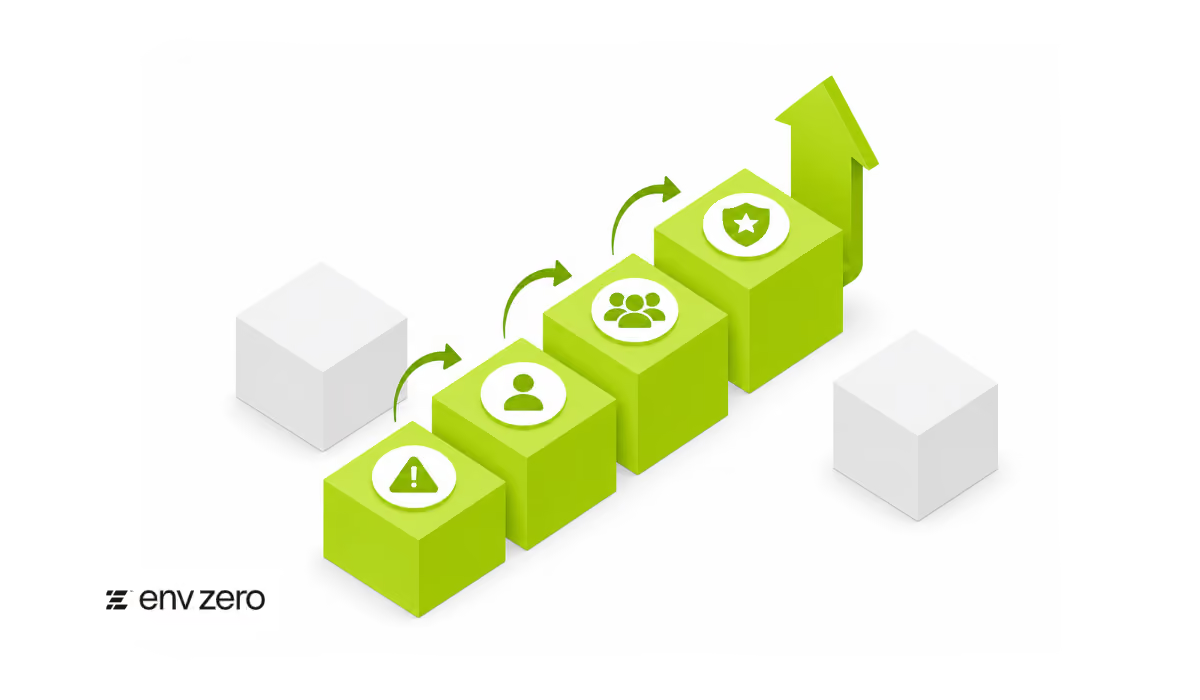
A developer autonomy maturity model typically evolves through five stages, each representing a different level of capability and scalability:
- Manual. Infrastructure is managed manually. Developers rely heavily on platform or DevOps teams to provision resources, and workflows are driven by tickets and approvals. This stage has low autonomy and high operational overhead.
- Transitional. As organizations begin adopting automation, some processes get automated, but access remains limited. Developers may use scripts or tools, but still depend on centralized teams for critical actions.
- Self-service. Developers gain the ability to provision resources independently using predefined templates and workflows. This improves speed, but governance may still be inconsistent.
- Policy-driven. Governance is embedded into infrastructure workflows through guardrails, ensuring that all actions comply with organizational standards. Developers operate independently, but within clearly defined boundaries.
- Fully integrated. Infrastructure, policies, templates, and workflows are unified into a cohesive system. Developers can operate at scale with minimal friction, and platform teams maintain full visibility and control.
From Control to Enablement: The Shift in Platform Teams
As organizations progress through the maturity model, the role of platform teams changes significantly.
In early stages, platform teams act as gatekeepers, controlling access to infrastructure and managing provisioning manually, an approach that limits scalability and creates bottlenecks. In later stages, platform teams become enablers: instead of controlling every action, they design systems that let developers operate independently, focusing on building templates, defining policies, and creating workflows that support scalable infrastructure delivery across teams and environments.
This shift is critical for scaling platform engineering. It lets platform teams extend their impact without increasing workload, improving both efficiency and ROI.
Balancing Autonomy and Governance at Scale
One of the most important aspects of the maturity model is the balance between autonomy and governance. Too much control slows down development, while too much autonomy introduces risk.
The maturity model ensures that this balance evolves over time: early stages prioritize control, while later stages introduce automation and policy-driven governance to support autonomy. By embedding governance into infrastructure workflows, organizations can maintain control without relying on manual oversight, letting developers move quickly while ensuring that all actions comply with organizational standards.
The enforcement mechanisms behind that governance are covered in the Policy Enforcement Framework for Platform Teams.
Measuring Progress Across Maturity Levels
A maturity model is only valuable if organizations can measure their progress. Platform teams need to evaluate where they stand and identify areas for improvement.
Key indicators include provisioning speed, dependency on manual approvals, consistency of infrastructure configurations, and developer experience. As organizations advance, cost governance and FinOps enablement becomes an increasingly important measure of maturity, ensuring that greater autonomy doesn't come at the expense of financial control.
Measuring progress also helps justify platform investments: by demonstrating improvements in efficiency, scalability, and governance, organizations can clearly see the impact of their platform engineering efforts. For a broader framework on quantifying that investment, see the Platform Engineering ROI Measurement Framework.
Common Challenges in Advancing Maturity
Moving from one maturity level to the next isn't always straightforward. Organizations often face challenges related to culture, tooling, and process alignment:
- Resistance to change. Teams accustomed to manual processes may be hesitant to adopt new workflows. Clear communication and training are essential to overcome this.
- Fragmentation. Without a unified platform, different teams may adopt different tools and practices, making it difficult to achieve consistency. Standardization is key to progressing through the maturity model.
- Governance not keeping pace. Organizations need to ensure that governance evolves alongside autonomy; without proper policies, increased autonomy can lead to unintended consequences.
How env zero Supports Developer Autonomy Maturity
Achieving higher levels of developer autonomy requires a platform that integrates self-service infrastructure, policy enforcement, and workflow automation.
env zero enables platform teams to build systems that support autonomy at scale. It lets organizations define templates, enforce policies through policy-as-code, and provide developers with a centralized interface for provisioning infrastructure. With env zero, organizations can progress through the maturity model more effectively, reducing manual dependencies, improving consistency, and creating a scalable system that balances autonomy with governance.
For the practical, get-started version of this topic, see How Platform Teams Create Developer Autonomy Without Losing Control.
Conclusion
A developer autonomy maturity model provides a clear path for organizations to evolve their platform engineering practices. It helps platform teams move from manual, reactive workflows to scalable, automated systems that enable developers to operate independently.
By understanding and applying this model, organizations can improve efficiency, reduce operational overhead, and create a better developer experience. More importantly, they can build a foundation for long-term growth and innovation.
If your organization is looking to improve developer autonomy without losing control, it's time to adopt a structured approach. With env zero, you can enable self-service infrastructure, enforce governance, and scale your platform engineering practices with confidence.
FAQs
What is developer autonomy in platform engineering?
Developer autonomy refers to the ability for developers to provision infrastructure, deploy applications, and manage resources independently without relying on manual approvals or centralized teams.
What is a maturity model in platform engineering?
A maturity model is a framework that defines stages of growth and capability within an organization. It helps teams assess their current state and plan improvements over time.
How many levels are in a developer autonomy maturity model?
While models may vary, most include stages ranging from manual processes to fully automated, policy-driven systems that support scalable autonomy.
Does developer autonomy reduce governance?
No, autonomy does not eliminate governance. Instead, governance is embedded into workflows through policies and guardrails, ensuring that all actions comply with organizational standards.
How can organizations improve developer autonomy?
Organizations can improve autonomy by implementing self-service infrastructure, automating workflows, and defining clear policies that allow developers to operate independently.
What are the risks of low autonomy?
Low autonomy leads to bottlenecks, slower development cycles, and increased dependency on platform teams, which limits scalability and efficiency.
What are the risks of too much autonomy?
Excessive autonomy without governance can lead to inconsistent configurations, security vulnerabilities, and uncontrolled costs.
How does autonomy impact developer experience?
Higher autonomy improves developer experience by reducing delays and allowing developers to focus on building rather than waiting for approvals.
What tools support developer autonomy?
Platforms that provide self-service infrastructure, policy enforcement, and workflow automation are essential. Solutions like env zero enable organizations to scale autonomy effectively.
How does autonomy improve platform engineering ROI?
By reducing delays, increasing productivity, and lowering operational overhead, autonomy enables organizations to deliver more value with fewer resources.
Related Content

Pulumi vs Terraform vs OpenTofu: A Decision Framework Based on Team Type, Scale, and License Risk


Terragrunt Directory Structure Framework: DRY Configs Across Dev, Staging, and Prod
Self-Service IaC Platform Framework: Guardrails, Templates, and Approval Workflows
Terraform Policy-as-Code Framework: Structuring OPA and Sentinel Rules Across Teams
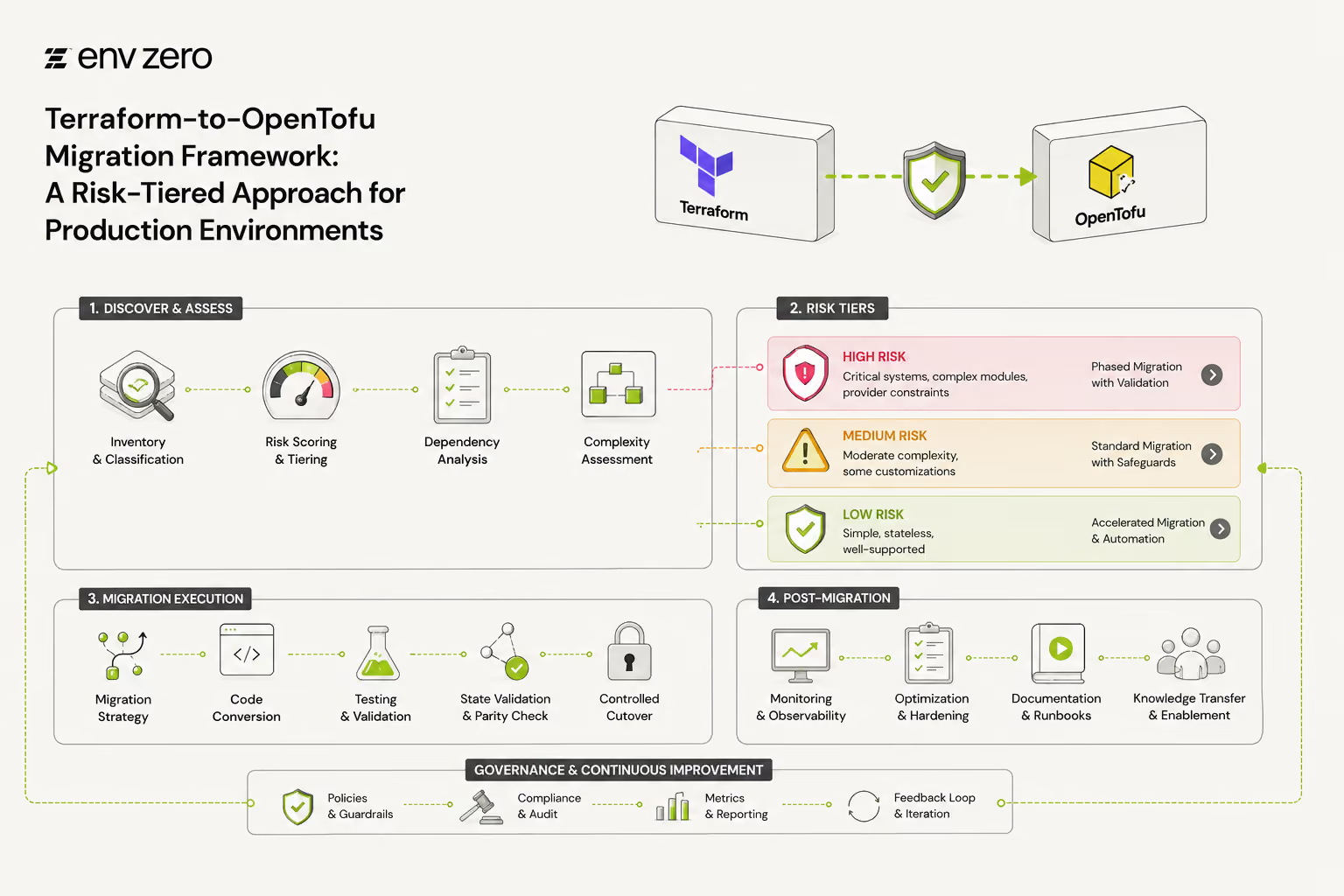
Terraform-to-OpenTofu Migration Framework: A Risk-Tiered Approach for Production Environments
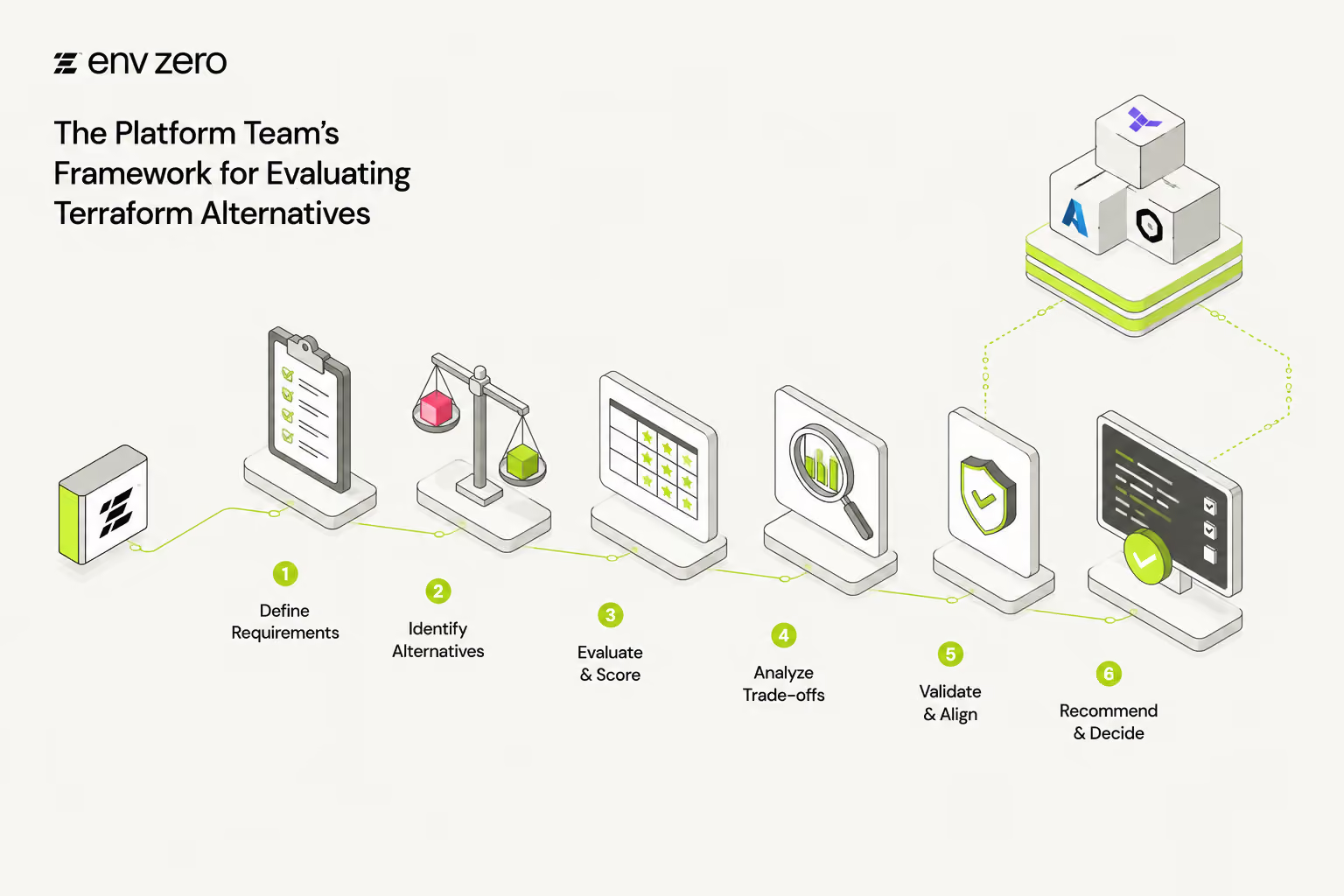


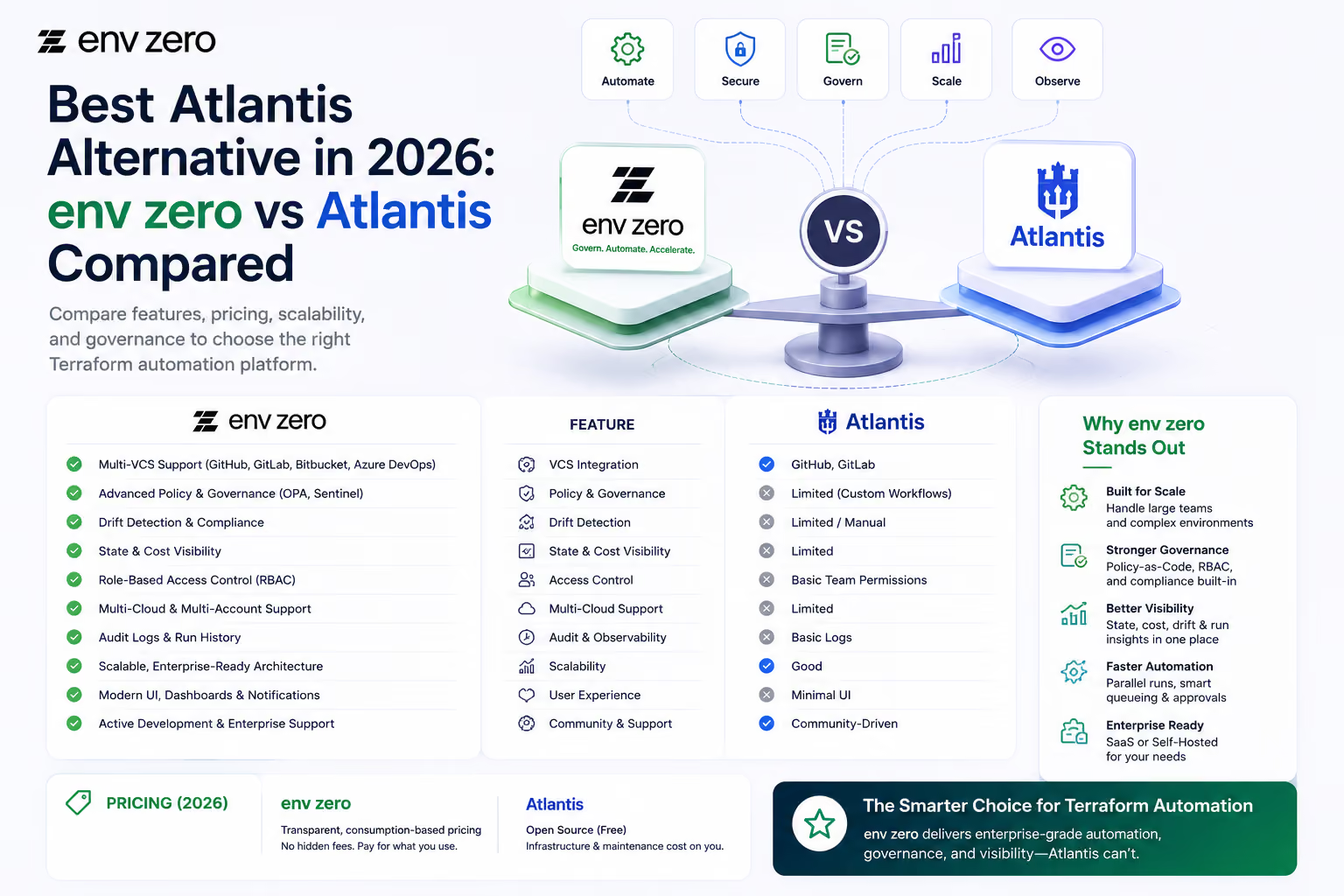






Enterprise Release Control Model: Structuring Secure and Scalable Deployment Workflows
Policy Checkpoint Framework: Enforcing Consistent and Scalable Governance Across Deployments

Audit Trail Governance Framework: Ensuring Transparency, Compliance, and Accountability Across Infrastructure
Release Governance Framework: Structuring Controlled and Compliant Infrastructure Releases

Environment Drift Detection Model: Maintaining Consistency Across Infrastructure Environments
Pipeline Visibility Framework: Structuring Transparent and Controlled Deployment Workflows