
Standardize How Every Team Ships Infrastructure.
Consistent execution. Structure that holds as you grow.





%25201.svg)







Why It Matters
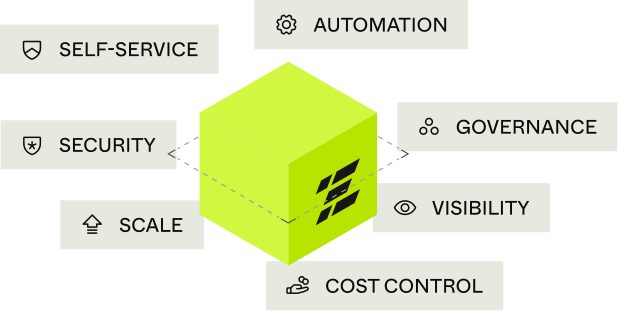
Define unified infrastructure workflows across teams and departments so execution is consistent at every stage of the deployment lifecycle. env zero removes the inconsistencies and friction that come from every team doing things its own way.
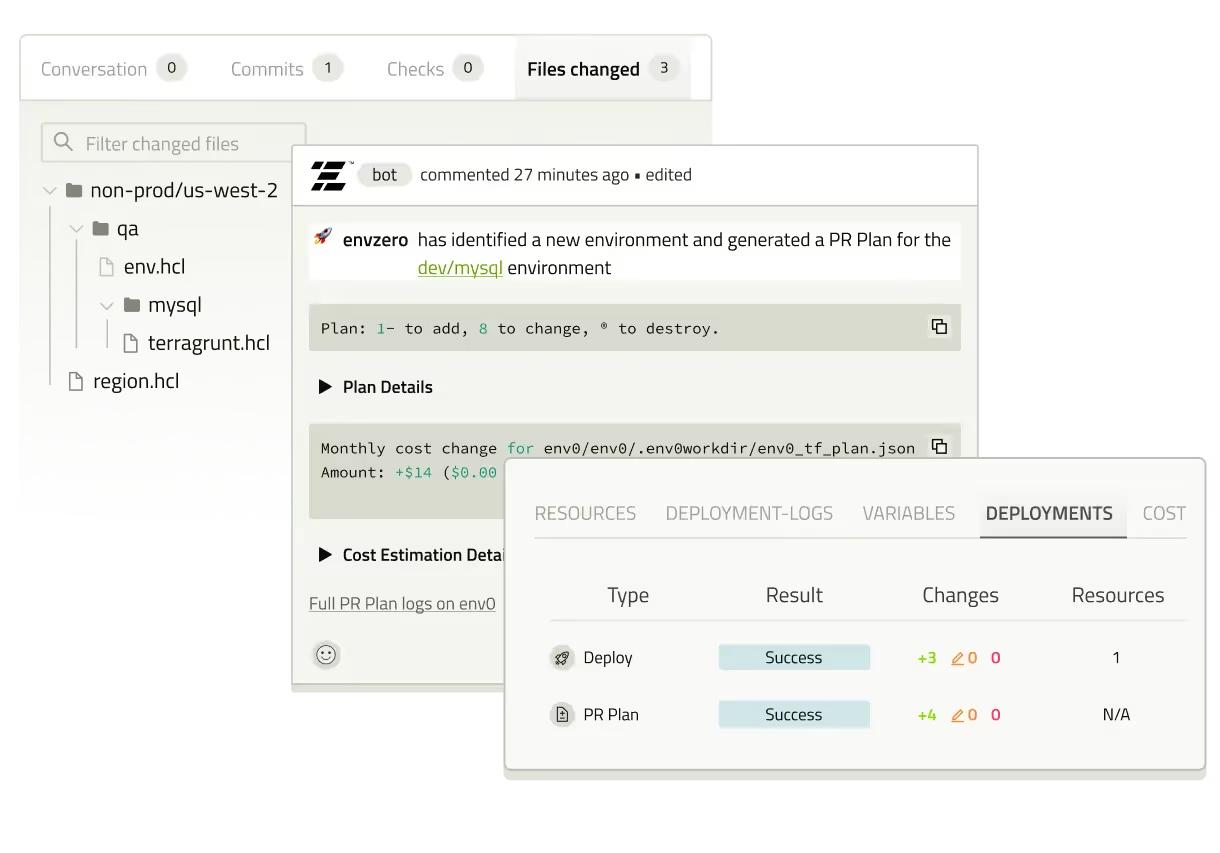
From pull request to post-deployment, plans, applies, validations, and follow-up actions all run inside the same policy-aware workflow. Every deployment follows the same standard, regardless of team, environment, or use case.
.avif)
Creating a CloudFront or EKS distribution used to take me about three days, now it takes about ten minutes, because we know the model works. All you have to do is populate a few values and that’s it.


Every Team Reinvents the Workflow. That Is the Problem.
Without a shared standard, infrastructure delivery fragments team by team, and the cost compounds as you scale:
The same task runs five different ways across five teams. Quality and reliability depend on who happens to own it.
Cross-team work turns into meetings and handoffs because there is no common, governed process to lean on.
Best practices live in a wiki nobody reads, so they erode the moment a deadline appears.
.avif)

One Operating Model for Infrastructure.
env zero gives every team the same repeatable, governed workflow, so standardization is built into how work happens rather than enforced after the fact.


What env zero Delivers for Standardization


Pre-approved templates, pipelines, and shared variables make the compliant path the easy path for every developer.
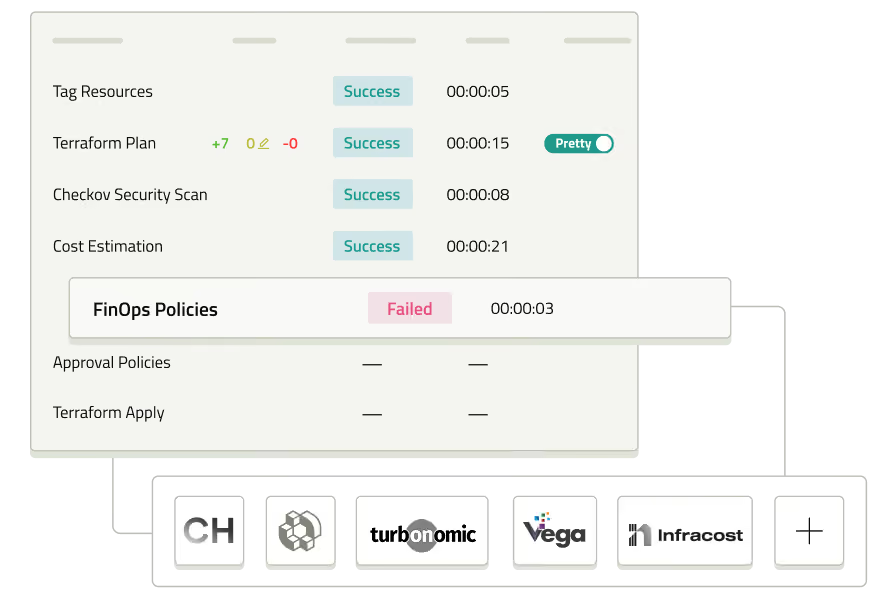
Integrate your tools, define your process, and enforce policies at each step. Build the pipeline your team actually runs, not a rigid template.
Manage standards from one place and apply them consistently across departments and environments.

Mirror how your company actually operates with a multi-level org, project, and environment model.

Give every team the same pull-request-driven workflow and the same scoped, governed access.

The Impact
With one standardized operating model, teams achieve:
Pismo standardized global-scale infrastructure delivery from two months to two days
From two months to deliver infrastructure at global scale, down to two days.
Pismo replaced slow, inconsistent delivery with a standardized, governed workflow, compressing infrastructure delivery at global scale from months into days.

Frequently asked
questions.
It means every team executes infrastructure work through the same governed, policy-aware process: the same templates, the same pipeline stages, the same access model, regardless of team or environment.
When the compliant path is the default path, people stop reinventing workflows and stop coordinating through meetings. Repeatable, governed processes remove the friction that slows fragmented teams down.
Standards are enforced as code and templates inside the workflow, not documented in a wiki. Because the standard way is the easy way, it holds up even under deadline pressure.
No. Teams still move fast and independently, they just do it on a shared foundation. The structure removes coordination overhead rather than adding approval gates.
A multi-level organization, project, and environment model lets you add teams without adding complexity. New teams inherit the same standards and structure from day one.
Ready to Migrate with Confidence?
Take the next step toward a more governed, scalable, and efficient cloud environment.
Don't see what you need?
Request an integration, tell us what we're missing.
.svg)