.svg)

Policy guardrails in infrastructure automation are a foundational element of modern cloud governance. As organizations scale Infrastructure as Code (IaC), Terraform workflows, and self-service platforms, the need to enforce security, compliance, and cost controls without slowing down development becomes critical.
Policy guardrails provide a structured way to embed governance directly into infrastructure workflows. Instead of relying on manual reviews or reactive fixes, organizations can proactively ensure that every deployment follows predefined rules. This approach enables teams to move faster while maintaining full control over cloud environments.
What Are Policy Guardrails in Infrastructure?
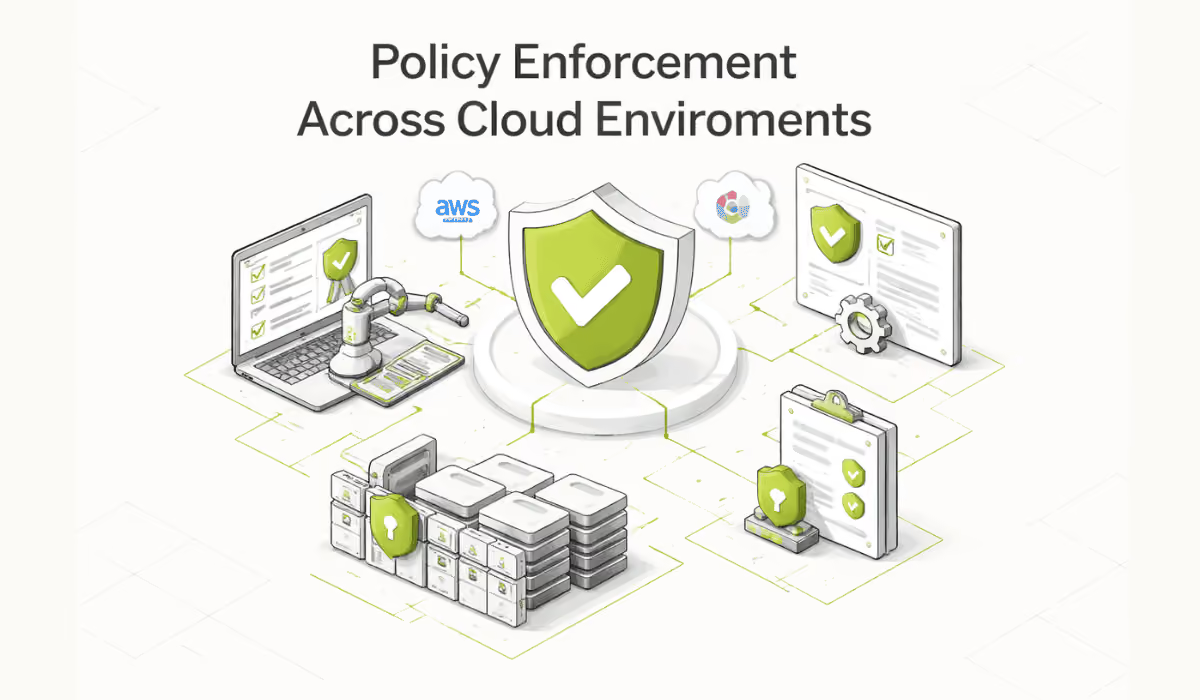
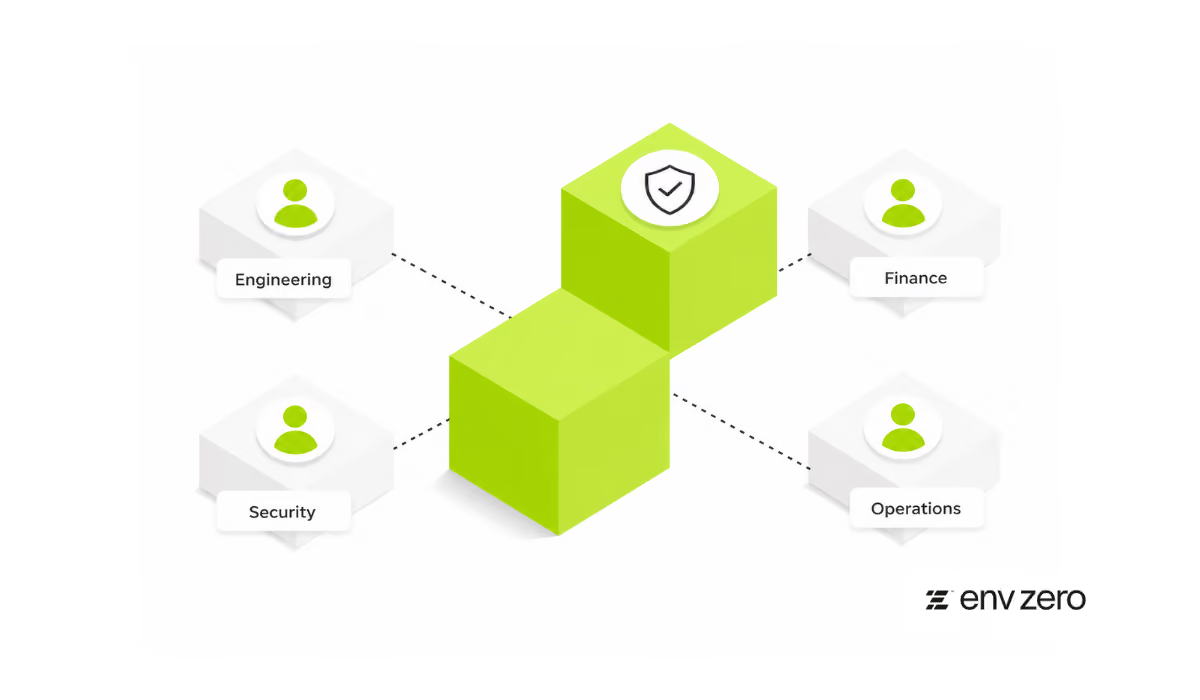
Policy guardrails are automated rules and controls that enforce organizational standards across infrastructure provisioning and management. These guardrails are typically implemented using policy-as-code frameworks, allowing them to be applied consistently and at scale. They define what is allowed, what is restricted, and what requires approval, which can include security configurations, resource limits, naming conventions, and compliance requirements.
Rather than acting as barriers, policy guardrails are designed to enable safe and scalable infrastructure automation.
Why Policy Guardrails Are Critical for Infrastructure Automation
Infrastructure automation increases speed, but it also increases risk if not properly governed. Without guardrails, teams can deploy insecure configurations, exceed budgets, or violate compliance requirements. Policy guardrails address this by embedding governance directly into automation workflows, ensuring that every deployment is validated before it is executed.
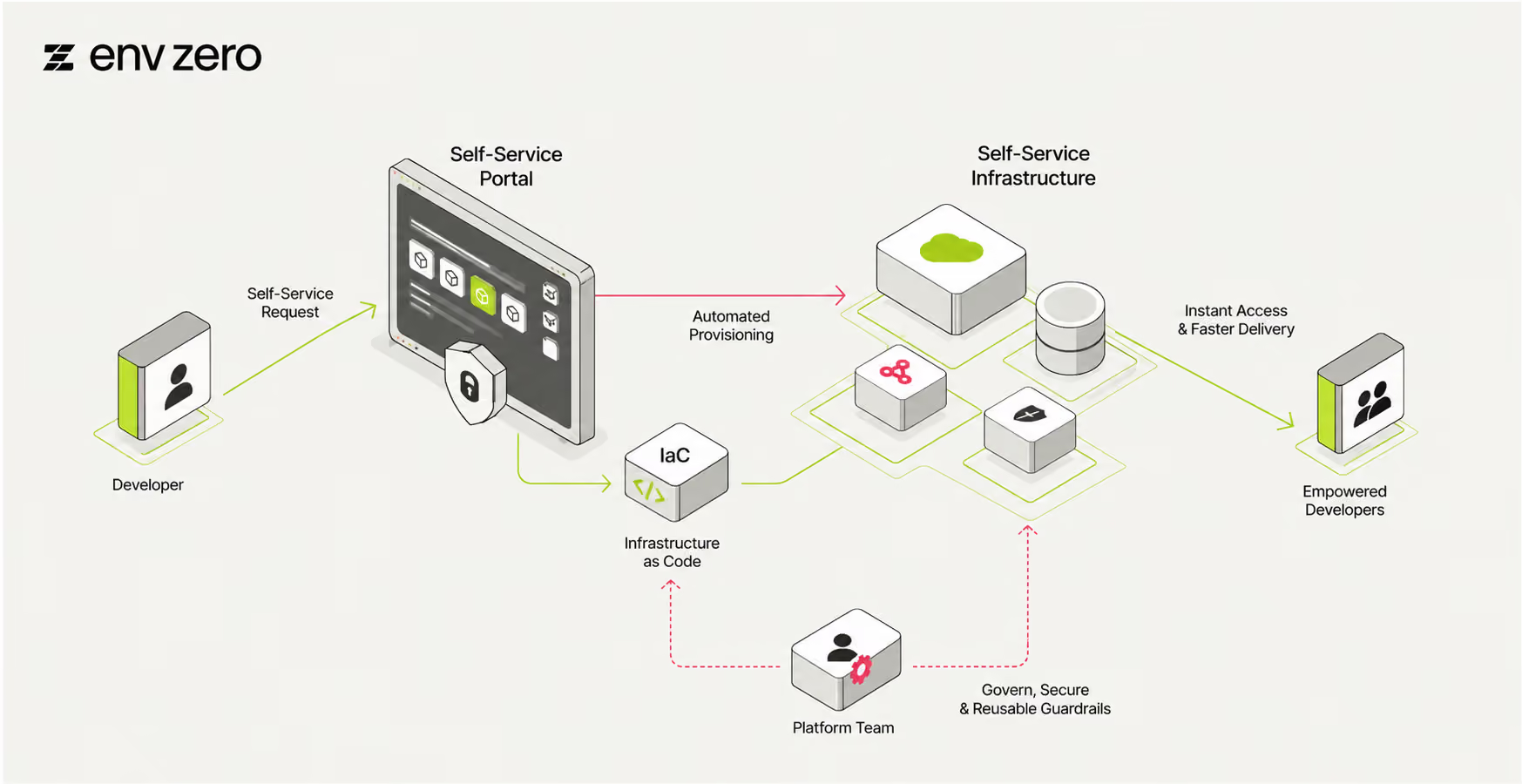
They also play a key role in enabling scalable infrastructure models. For example, in Infrastructure Self-Service vs Ticket-Based Provisioning: Which Scales Better?, self-service approaches rely heavily on policy guardrails to maintain control while eliminating manual bottlenecks.
Key Benefits of Policy Guardrails
- Consistent governance: policy guardrails ensure that all infrastructure follows the same standards, reducing variability and risk.
- Improved security: security policies are enforced automatically, preventing misconfigurations and vulnerabilities.
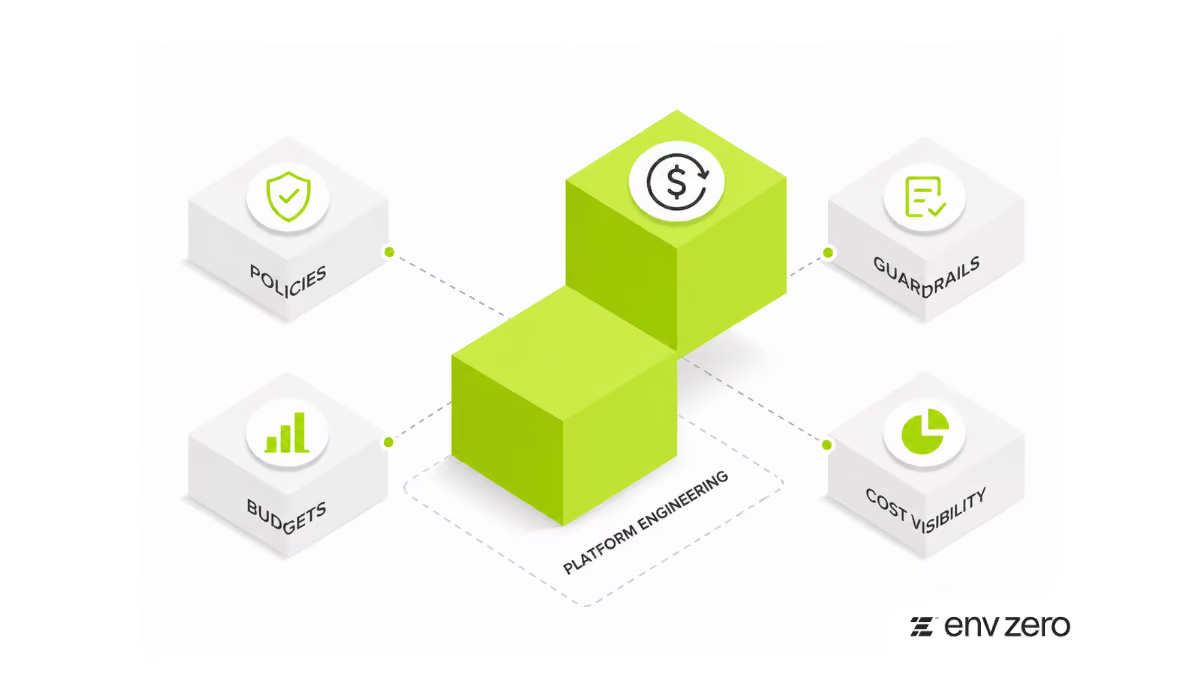
- Cost control: guardrails can enforce budget limits and provide cost visibility, helping organizations manage cloud spending effectively.
- Faster deployments: by automating policy enforcement, teams can avoid manual reviews and accelerate deployment cycles.
How Policy Guardrails Work in Practice
Policy guardrails are typically integrated into infrastructure workflows and CI/CD pipelines, operating at different stages of the deployment process to ensure compliance:
- Pre-deployment validation: before infrastructure is provisioned, policies validate configurations to ensure they meet required standards, preventing non-compliant deployments from proceeding.
- Real-time enforcement: during deployment, guardrails enforce rules such as resource limits, access controls, and security configurations.
- Post-deployment monitoring: after deployment, guardrails continue to monitor infrastructure for compliance and trigger alerts if violations occur.
- Approval workflows: certain actions, such as production deployments or high-cost resources, can require approval, ensuring additional oversight where needed.
Common Types of Policy Guardrails
Most implementations combine a few recurring categories:
- Security guardrails: enforce encryption, network configurations, and access controls to protect infrastructure.
- Compliance guardrails: ensure that deployments meet regulatory requirements such as SOC 2, HIPAA, or GDPR.
- Cost guardrails: control spending by enforcing budgets, limits, and cost visibility.
- Operational guardrails: standardize naming conventions, tagging, and resource configurations to improve manageability.
Policy Guardrails vs Manual Governance
Manual governance relies on human intervention to review and approve infrastructure changes. While this provides oversight, it is not scalable and introduces delays. Policy guardrails automate governance, ensuring that rules are enforced consistently without slowing down development. This shift from manual to automated governance is essential for modern cloud environments.
Use Cases for Policy Guardrails
- Enterprise cloud environments: organizations use guardrails to enforce security and compliance across multiple teams and accounts.
- DevOps and platform engineering: guardrails enable self-service infrastructure by providing built-in governance.
- Multi-cloud management: guardrails ensure consistent policies across different cloud providers.
- Cost optimization initiatives: organizations use guardrails to prevent overspending and improve financial accountability.
Policy guardrails are closely connected to capabilities such as policy as code, infrastructure orchestration, cloud cost management, and self-service infrastructure. env zero provides a centralized platform that enables organizations to implement policy guardrails across all infrastructure workflows, ensuring governance, visibility, and automation at scale.
Best Practices for Implementing Policy Guardrails
- Define clear policies: start by identifying security, compliance, and cost requirements.
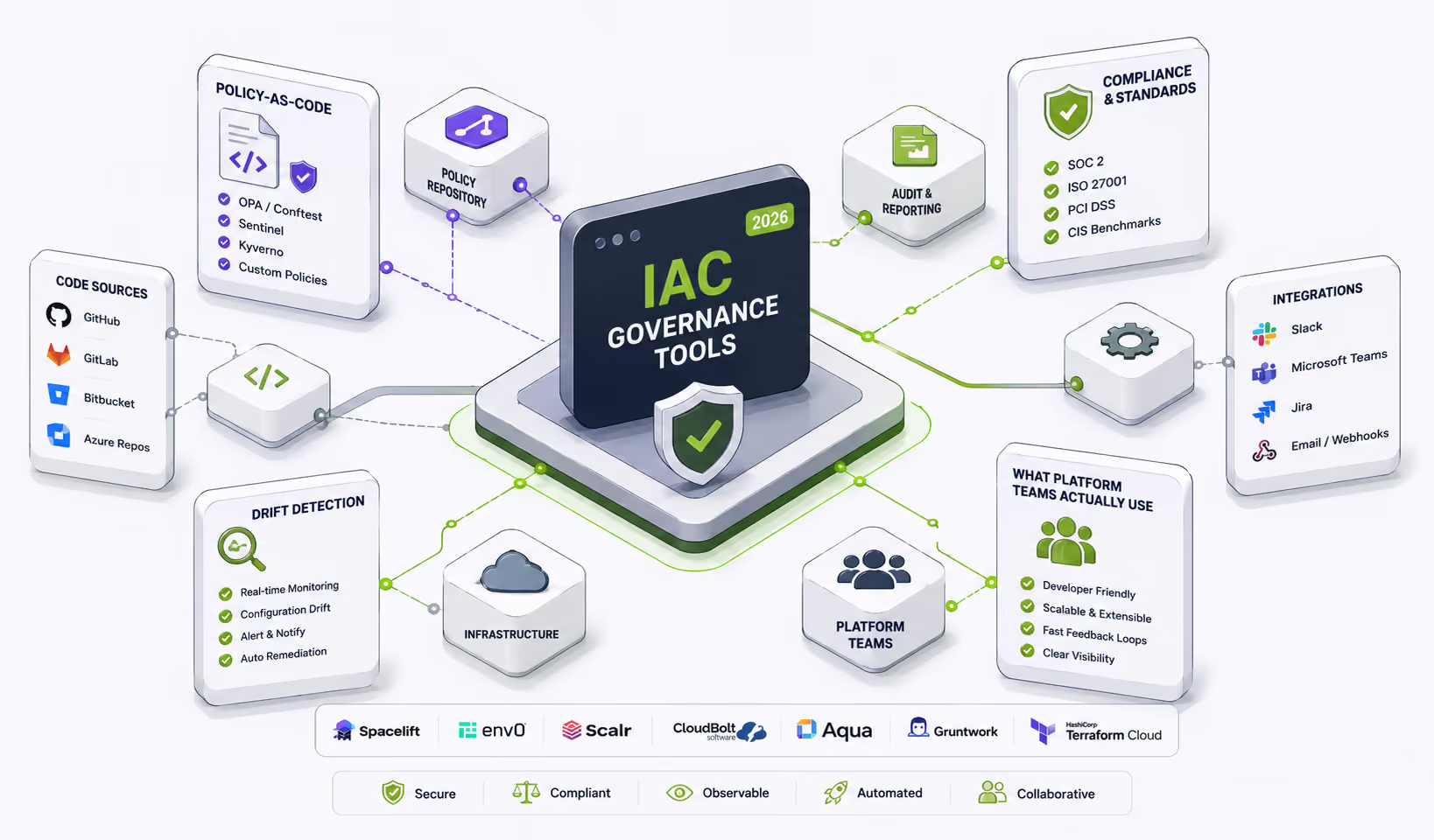
- Use policy as code: implement policies in code form to enable automation and scalability.
- Integrate with CI/CD pipelines: ensure that policies are enforced during every stage of the deployment process.
- Monitor continuously: track compliance and adjust policies based on real-time data and feedback.
- Balance control and flexibility: avoid overly restrictive policies that can slow down development.
Conclusion
Policy guardrails are essential for modern infrastructure automation. They provide the balance between speed and control, enabling organizations to scale cloud operations while maintaining governance.
Implement policy guardrails at scale with env zero to automate governance, improve security, and maintain full control over your infrastructure.
FAQs
What are policy guardrails in infrastructure?
Policy guardrails are automated rules and controls that enforce security, compliance, and cost standards during infrastructure provisioning and management, ensuring consistent and governed cloud operations. For a deeper, framework-level treatment of this topic, see Policy Enforcement Framework for Platform Teams.
What are policy guardrails used for?
Policy guardrails are used to enforce organizational standards across infrastructure, ensuring security, compliance, and cost control without requiring manual intervention.
How do policy guardrails improve security?
They automatically enforce security policies during deployments, reducing the risk of misconfigurations and vulnerabilities.
Are policy guardrails scalable?
Yes, because they are implemented as code and integrated into automation workflows, they can scale across large and complex environments.
Do policy guardrails slow down development?
No, they actually speed up development by eliminating manual reviews and enabling automated compliance.





.avif)