.svg)

Infrastructure consistency is critical for reliable deployments, but maintaining it at scale is increasingly difficult. Even small, unnoticed changes can lead to significant issues across environments over time.
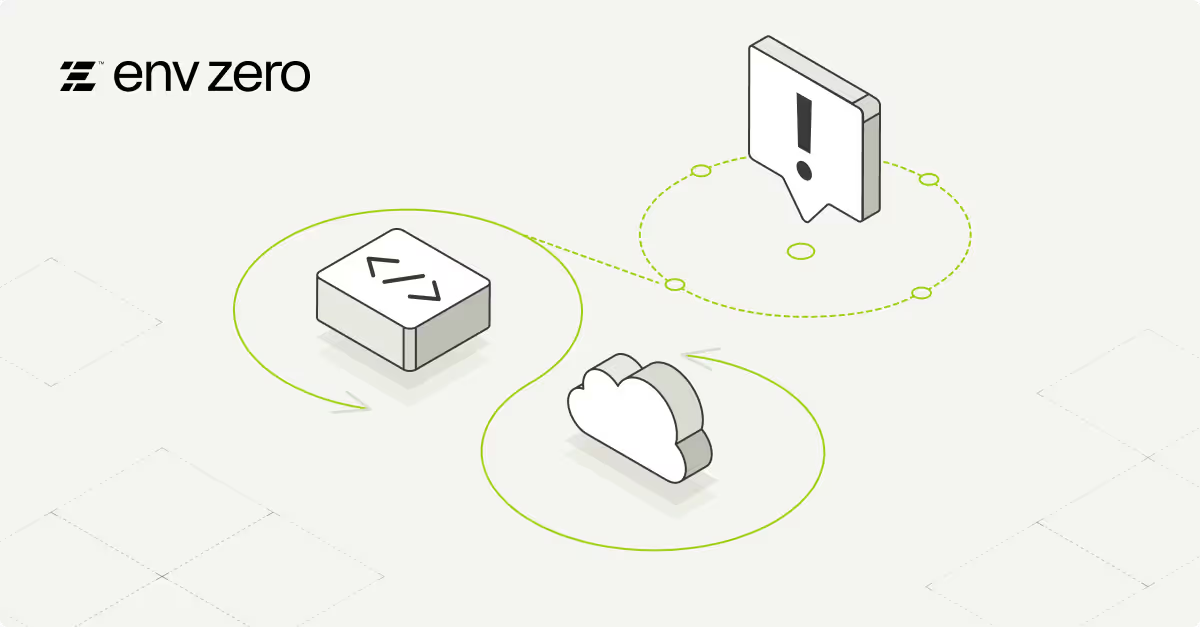
In modern infrastructure environments, platform teams rely on automation and Infrastructure as Code (IaC) to ensure consistency across deployments. However, despite these practices, environments can gradually diverge from their intended configurations. This phenomenon, known as environment drift, occurs when the actual state of infrastructure differs from its defined baseline.
Over time, this drift can impact deployment quality, leading to inconsistencies, failures, and increased operational risk. Understanding how environment drift affects deployment quality is essential for platform teams looking to maintain reliability, scalability, and control across their infrastructure.
What Is Environment Drift?
Environment drift refers to the gradual divergence between the expected configuration of infrastructure and its actual deployed state. This can occur due to manual changes, incomplete deployments, configuration updates, or external system modifications. Even minor deviations can accumulate over time, creating significant inconsistencies between environments such as development, staging, and production.
Why Deployment Quality Depends on Consistency
Deployment quality is directly tied to how consistent infrastructure environments are. When environments are aligned, deployments behave predictably, and teams can confidently release changes. However, when drift occurs, this consistency is lost, and deployments may behave differently across environments, making it difficult to test, validate, and release changes reliably.
Consistency ensures that what works in one environment will work in another, which is essential for maintaining deployment quality.
How Environment Drift Impacts Deployment Quality
Drift shows up as a consistent set of downstream problems:
- Inconsistent deployment behavior: a deployment that works in staging may fail in production due to differences in configuration. This unpredictability makes it difficult to trust deployment outcomes and increases the risk of failure.
- Increased deployment failures: drift introduces hidden discrepancies that can cause deployments to fail unexpectedly. These failures often occur late in the pipeline, making them more difficult and costly to resolve, and as drift increases, so does the likelihood of deployment issues.
- Reduced testing accuracy: testing relies on environments that accurately reflect production. When drift exists, testing results become unreliable, since they are based on configurations that do not match the actual deployment environment, reducing confidence in test outcomes and increasing the risk of releasing faulty changes.
- Longer troubleshooting time: when deployments fail due to drift, identifying the root cause becomes more complex, since teams must analyze differences between environments to determine what caused the issue. This increases troubleshooting time and delays recovery.
- Security and compliance risks: drift can lead to unauthorized or unintended configuration changes, creating security vulnerabilities and compliance issues that are often difficult to detect without proper monitoring. Implementing strong cloud governance & risk management solutions helps enforce policy controls, improve compliance visibility, and reduce infrastructure risk caused by configuration drift.
- Operational inefficiencies: as drift increases, teams spend more time managing inconsistencies and resolving issues, which reduces productivity and slows down deployment cycles as environments become more difficult to manage.
Common Causes of Environment Drift
- Manual changes outside IaC: when changes are made manually instead of through Infrastructure as Code, they are not tracked or replicated across environments, which leads to inconsistencies and increases the likelihood of drift.
- Incomplete or failed deployments: partial deployments can leave environments in inconsistent states. If not corrected, these inconsistencies contribute to drift over time.
- Configuration updates without synchronization: changes made to configurations in one environment may not be applied to others, leading to divergence.
- Tooling and integration gaps: using multiple tools without proper integration can result in inconsistent configurations and missed updates.
- Lack of continuous monitoring: without continuous monitoring, drift can go undetected until it causes significant issues.
How to Reduce the Impact of Environment Drift
- Use Infrastructure as Code (IaC): defining infrastructure through code ensures consistency across environments and enables version control.
- Implement continuous drift detection: monitoring systems should continuously compare actual infrastructure states with defined configurations to detect drift early.
- Automate remediation: automated remediation ensures that drift is corrected quickly, reducing the impact on deployment quality. Organizations that aim to fully automate the full deployment lifecycle with guardrails can enforce consistency across environments by combining drift detection, policy checks, and automated remediation within their deployment pipelines.
- Standardize configurations: using standardized templates and workflows helps maintain consistency across environments.
- Integrate monitoring and logging: comprehensive monitoring ensures that drift is detected and addressed in real time.
How env zero Helps Manage Environment Drift
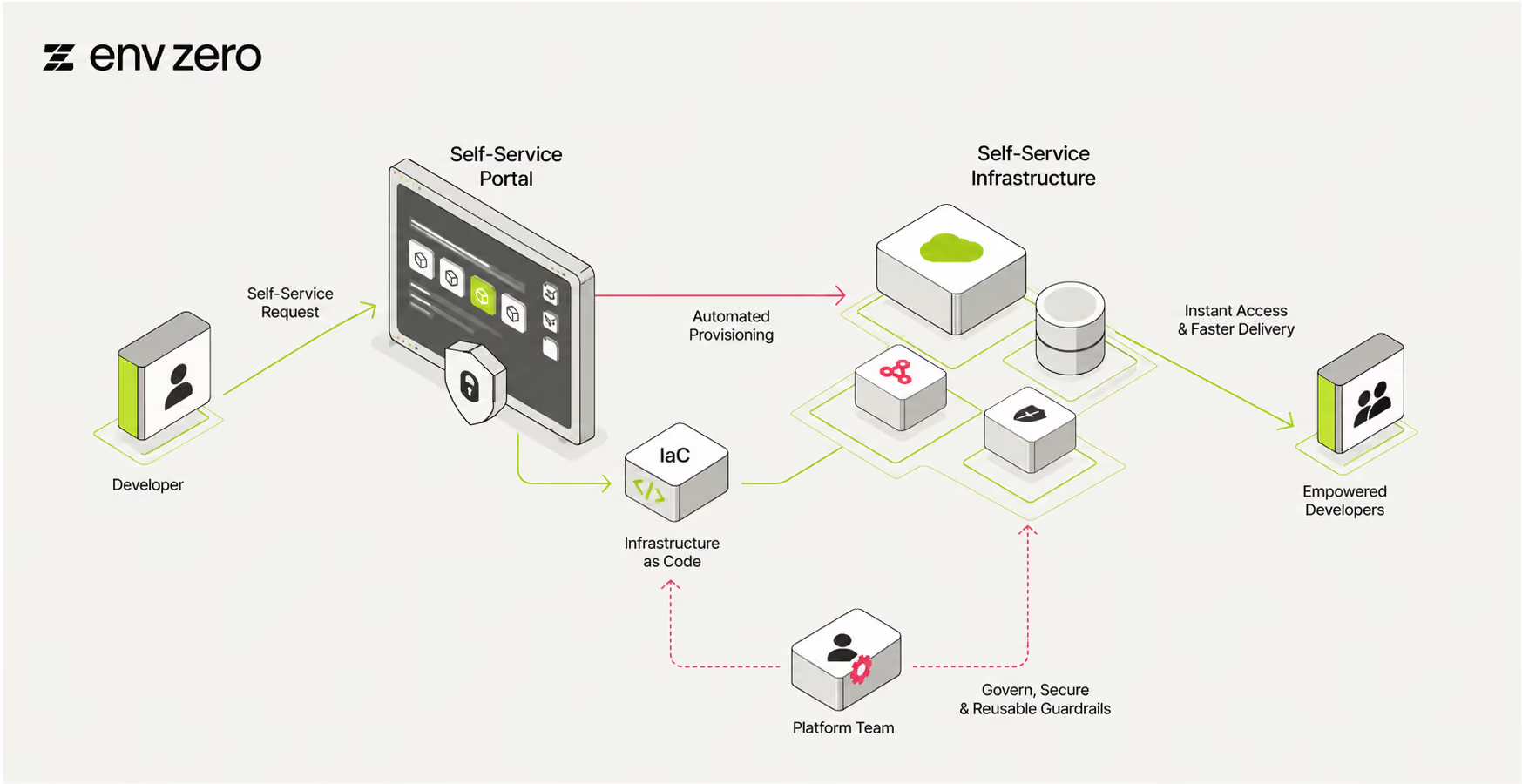
env zero enables platform teams to detect and manage environment drift by integrating monitoring, policy enforcement, and automation into deployment workflows. With env zero, teams can track infrastructure changes, compare them against defined baselines, and identify drift in real time.
It supports automated remediation, ensuring that environments remain aligned with organizational standards, and provides visibility into drift events, helping teams understand the root causes and maintain consistent infrastructure across environments.
Benefits of Managing Environment Drift
- Deployment reliability: ensures consistency across environments.
- Testing accuracy: aligns environments with production configurations.
- Reduced operational risk: identifies and corrects discrepancies early.
- Improved efficiency: lets teams focus on delivering value rather than troubleshooting issues.
For the structured, implementation-ready version of this model, see Environment Drift Detection Model.
Conclusion
Environment drift is a significant challenge for platform teams, but it can be effectively managed with the right strategies and tools. By maintaining consistency across environments, teams can improve deployment quality, reduce risk, and ensure reliable infrastructure delivery. With solutions like env zero, organizations can detect, manage, and prevent drift, ensuring that their infrastructure remains aligned and scalable.
Struggling with inconsistent environments and deployment issues? env zero helps you detect drift, enforce consistency, and maintain control across your infrastructure. Ensure reliable deployments and improve quality across every environment.
FAQs
What is environment drift in infrastructure?
Environment drift occurs when the actual state of infrastructure differs from its defined configuration, leading to inconsistencies across environments.
How does environment drift affect deployment quality?
Drift causes inconsistencies that lead to deployment failures, unreliable testing, and increased troubleshooting time, reducing overall deployment quality.
What are the main causes of environment drift?
Common causes include manual changes, incomplete deployments, configuration mismatches, and lack of monitoring. These issues often arise when updates are made outside of controlled workflows or not consistently applied across environments.
How can teams detect environment drift?
Drift can be detected using automated monitoring and comparison tools that evaluate infrastructure against defined baselines. These tools continuously track changes and highlight discrepancies between expected and actual configurations. Early detection helps teams address issues before they impact deployments and ensures environments remain aligned.
How does env zero help with environment drift?
env zero provides real-time drift detection, automated remediation, and visibility into infrastructure changes, helping teams maintain consistency. It compares live environments against defined configurations and flags any deviations. This enables teams to quickly identify and resolve drift while maintaining control across environments.
Can environment drift be prevented?
While it cannot be completely eliminated, drift can be minimized through Infrastructure as Code (IaC), automation, and continuous monitoring. By standardizing configurations and enforcing changes through controlled workflows, teams can reduce inconsistencies. Ongoing monitoring ensures that any deviations are detected and corrected early.
Why is consistency important for deployment quality?
Consistency ensures that deployments behave predictably across environments, improving reliability and reducing the risk of failures. It allows teams to trust testing results and confidently release changes to production. Consistent environments also simplify troubleshooting and help maintain stable, scalable infrastructure.







.avif)