.svg)

Approval automation has become a critical capability for platform teams operating in modern cloud environments. As organizations scale infrastructure across multiple teams, regions, and services, traditional approval processes start to break down: manual reviews, ticket-based workflows, and centralized control models introduce delays that hit developer productivity and delivery speed directly.
At the same time, organizations can't just remove approvals altogether, since governance, security, and cost control still need oversight. The real challenge isn't eliminating approvals, it's making them scalable. Approval automation solves this by embedding decision-making directly into infrastructure workflows: instead of relying on human intervention, platform teams define policies that automatically approve, reject, or escalate requests based on predefined conditions, maintaining control while meaningfully improving speed and efficiency.
Why Traditional Approval Workflows Fail at Scale
In many organizations, infrastructure approvals are still handled manually: developers submit requests, platform or DevOps teams review them, and approvals get granted based on individual judgment. That works fine for smaller teams, but it becomes unsustainable as demand grows: request volume increases rapidly, platform teams become the bottleneck, and developers wait on approvals before they can proceed, which slows development cycles and, over time, pushes developers to bypass official processes altogether out of sheer frustration.
Manual approvals also introduce inconsistency, since different reviewers apply different standards, which creates variability in how infrastructure actually gets provisioned. That lack of standardization increases risk and makes governance harder to enforce with each passing reviewer.
What Approval Automation Actually Means
Approval automation doesn't mean removing control, it means shifting from human-driven decision-making to policy-driven workflows. In an automated system, approvals run on rules defining what's allowed, what requires review, and what gets blocked outright, factoring in things like environment type, cost thresholds, resource configurations, and user roles.
Low-risk changes, like creating a development environment, might get automatically approved, while high-cost or production-level deployments require escalation instead. That's what keeps approvals consistent and efficient at once, a core principle of cloud governance and risk management.
How Approval Automation Improves Platform Engineering ROI
Approval automation directly impacts platform engineering ROI by removing friction from infrastructure workflows while keeping governance intact. Once approvals are automated, developers stop waiting on manual reviews, which cuts lead time and lets teams move faster, and platform teams get freed from repetitive review work to focus on improving platform capabilities instead of processing requests one at a time.
The result is a system where speed and control are both optimized rather than traded off against each other, letting organizations scale infrastructure operations without scaling overhead alongside it, which is exactly what drives ROI here.
Balancing Speed and Governance Through Policy
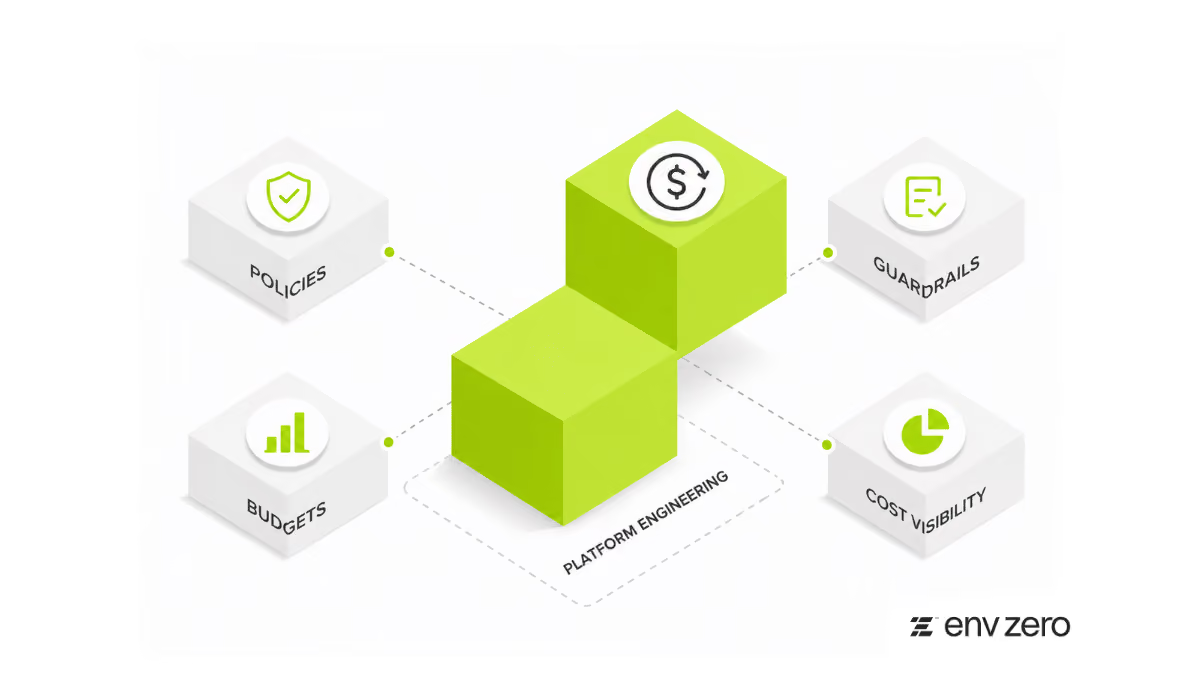
One of the biggest misconceptions about approval automation is that it reduces control. In reality, it strengthens governance by making it consistent and enforceable at scale: policies define the boundaries developers operate within, covering security requirements, cost limits, compliance rules, and access controls, and embedding those rules into automated workflows means every action gets evaluated against the same standard instead of whoever happens to be reviewing that day.
That eliminates the variability of manual approvals, reduces the risk of human error, and applies governance in real time rather than after the fact, when the damage is already done.
Where Platform Teams Should Start
Implementing approval automation doesn't require a complete overhaul of existing systems:
- Identify friction points: find where manual approvals create the most friction, typically environment provisioning, access requests, and production deployments, then analyze those workflows to determine which approvals can be safely automated and which still need additional oversight.
- Define clear policies: policies should reflect organizational requirements while staying flexible enough to support developer workflows. Starting with simple rules before gradually expanding them helps teams build confidence in the system as they go. See Approval Policies for Cloud Teams for how to design that risk-based policy structure in more depth.
- Integrate with existing workflows: approval automation should be embedded into CI/CD pipelines and infrastructure provisioning processes for seamless operation. See Approval Pipelines in Infrastructure Delivery for what that integration actually looks like in practice.
Common Mistakes to Avoid
- Over-automating without clear policies first: automation without governance can lead to unintended consequences like security risks and uncontrolled costs, so defining policies before implementing automation isn't optional.
- Being too restrictive: overly rigid approval rules just recreate the same bottlenecks automation was supposed to eliminate, when the actual goal is enabling developers, not slowing them down further.
- Failing to provide visibility: this undermines trust in the system altogether. Developers and platform teams both need clear insight into how decisions get made and why specific actions were approved or rejected.
How Approval Automation Works with Self-Service Infrastructure
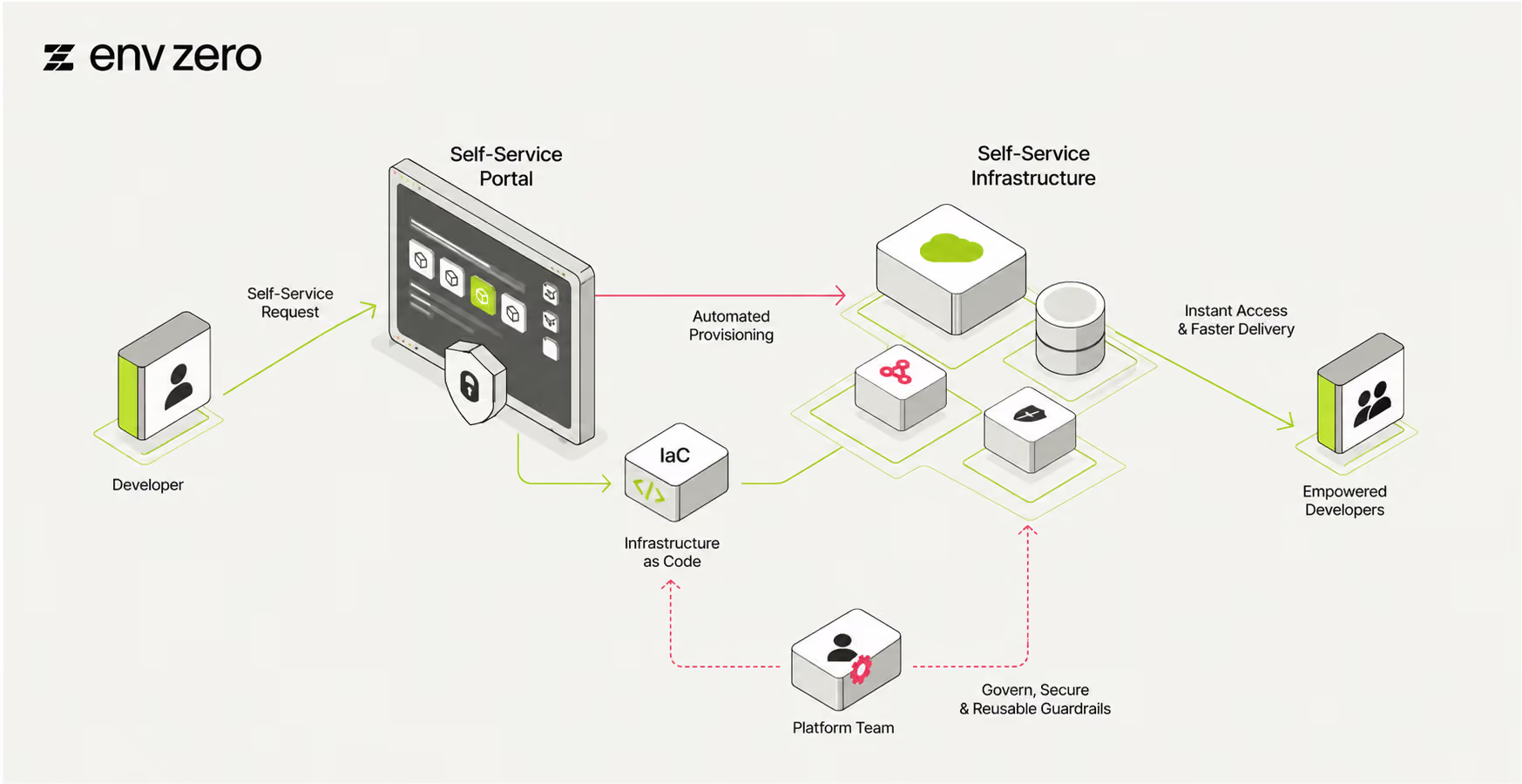
Approval automation is a key component of self-service infrastructure. Together, they create a system where developers provision resources independently while governance still gets enforced automatically: self-service infrastructure provides the interface and workflows developers use, while approval automation makes sure every action complies with organizational policy. Together, they help teams automate the full deployment lifecycle, enabling both autonomy and control at scale rather than forcing a tradeoff between them.
How env zero Enables Approval Automation at Scale
Implementing approval automation effectively requires a platform that integrates policy enforcement, workflow automation, and infrastructure orchestration. env zero provides these capabilities, letting platform teams define approval rules using policy-as-code, automate decision-making within infrastructure workflows, and maintain full visibility across environments.
With env zero, organizations can automate routine approvals, enforce governance consistently, and scale infrastructure operations without scaling complexity alongside them, which is what lets platform teams deliver faster, more reliable outcomes without giving up control to get there.
For the structured, implementation-ready version of this model, see Enterprise Approval Framework for Self-Service Infrastructure.
Conclusion
Approval automation isn't just an efficiency improvement, it's a necessity for scaling platform engineering. Replacing manual approval processes with policy-driven workflows is what lets organizations eliminate bottlenecks, improve consistency, and maintain governance at scale, and as infrastructure environments keep growing, the ability to automate approvals only becomes more important. Organizations that adopt this approach end up delivering faster, operating more efficiently, and achieving stronger platform engineering ROI as a result.
If your team is still relying on manual approvals, it's time to rethink the approach. With env zero, you can automate approvals, enforce policies, and let your developers move faster, without giving up control to do it.
FAQs
What is approval automation in infrastructure management?
Approval automation is the process of using predefined policies to automatically approve, reject, or escalate infrastructure requests. It eliminates the need for manual reviews while ensuring that all actions comply with organizational standards.
How does approval automation improve developer productivity?
By removing delays caused by manual approvals, developers can provision resources and deploy changes more quickly. This reduces wait times and allows teams to focus on building and delivering features.
Is approval automation safe for production environments?
Yes, when implemented with proper policies, approval automation is safe for production use. High-risk actions can still require escalation, while low-risk tasks are automated to improve efficiency.
What types of approvals can be automated?
Common examples include development environment provisioning, low-cost resource creation, and routine infrastructure updates. More critical actions can be partially automated with escalation rules.
How do policies control approval automation?
Policies define the conditions under which actions are approved or rejected. They can include rules related to cost, security, environment type, and user roles, ensuring consistent governance.
Does approval automation eliminate the need for oversight?
No, it shifts oversight from manual reviews to policy-driven systems. This allows organizations to maintain control while improving efficiency and scalability.
How does approval automation relate to self-service infrastructure?
Approval automation enables self-service infrastructure by ensuring that developers can provision resources independently while still complying with governance rules.
Can approval automation reduce operational costs?
Yes, by eliminating manual processes and reducing the workload on platform teams, approval automation lowers operational costs and improves efficiency.
What tools are required for approval automation?
Organizations need platforms that support policy-as-code, workflow automation, and infrastructure orchestration. Solutions like env zero provide these capabilities in a unified system.
How do you start implementing approval automation?
Start by identifying bottlenecks in current workflows, defining clear policies, and gradually automating approvals for low-risk actions before expanding to more complex scenarios.







.avif)