The 4 Stages of Terraform Automation: From Basic CI/CD to Self-Service Infrastructure Governance
.svg)


Infrastructure as Code (IaC) has transformed how organizations manage cloud infrastructure, and Terraform has become one of the most widely adopted tools in this space. However, not all organizations are at the same level of Terraform maturity. As teams grow and infrastructure becomes more complex, automation practices must evolve to improve efficiency, security, governance, and scalability.
In this article, we'll explore the four stages of Terraform automation and examine how organizations can progress from simple Git-based workflows to fully governed self-service infrastructure platforms.
Watch Full Video:
Understanding Terraform Automation Maturity
Terraform automation is not a one-size-fits-all solution. Organizations typically progress through different stages as their infrastructure requirements become more sophisticated. Each stage introduces new capabilities that help teams manage infrastructure more efficiently while reducing operational risks.
The four stages include:
- Basic Automation with Version Control Systems
- Infrastructure as Code Specialized Pipelines
- Advanced Terraform Orchestration
- Self-Service with Governance
Let's examine each stage in detail.
Stage 1: Basic Automation with Version Control Systems
The first stage of Terraform automation focuses on integrating Terraform with version control systems such as GitHub or GitLab.
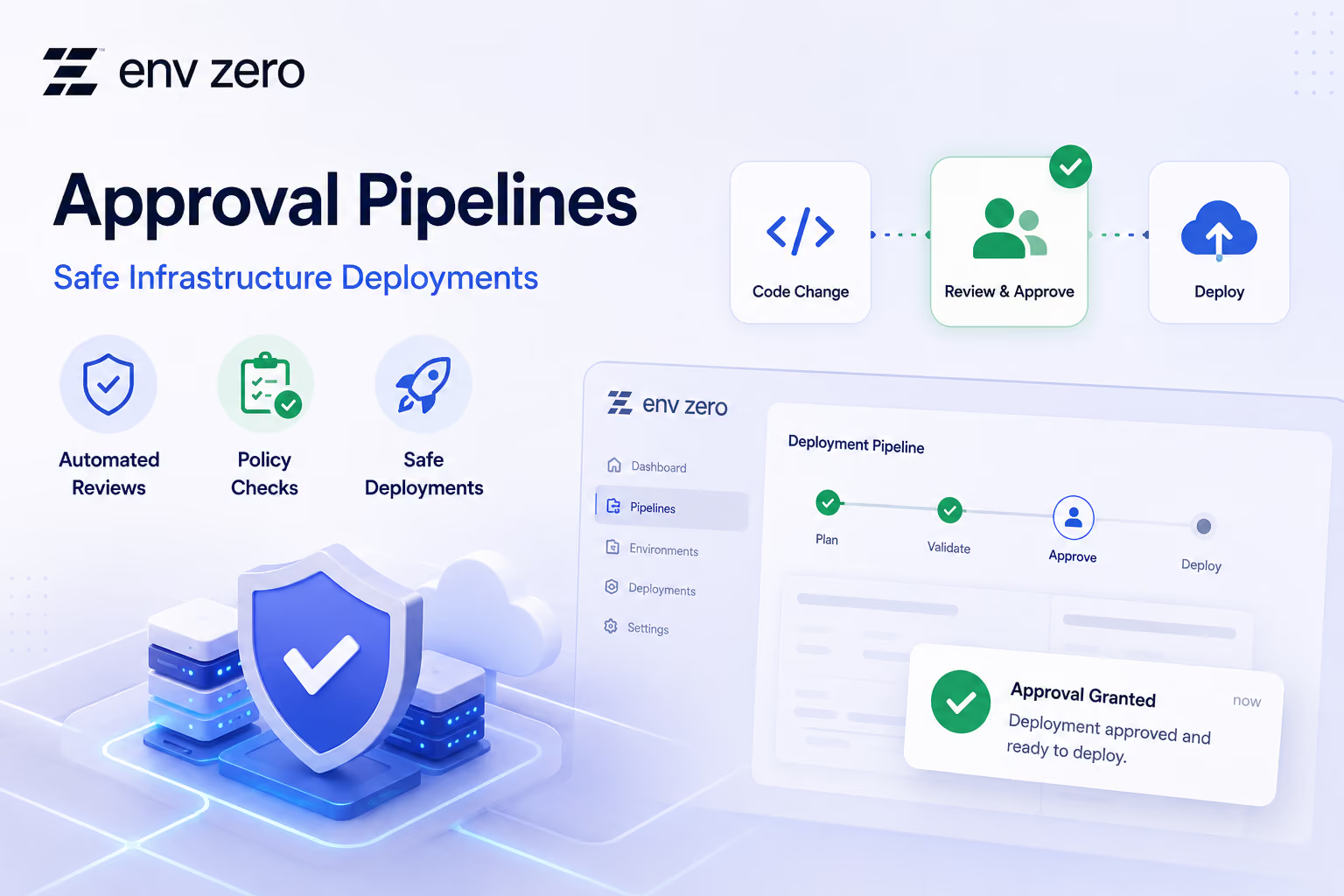
At this level, teams typically use tools like Atlantis to automate Terraform workflows. Whenever a pull request or merge request is opened, Terraform automatically generates a plan and posts the output for review.
Key Characteristics
- Terraform code stored in Git repositories
- Automatic Terraform plan generation on pull requests
- Infrastructure changes reviewed before deployment
- Manual approval process before applying changes
- Basic collaboration between team members
Benefits
This approach provides visibility into infrastructure changes before deployment. Team members can review proposed modifications, identify potential issues, and approve changes with confidence.
Organizations at this stage establish the foundation for Infrastructure as Code by ensuring that all infrastructure modifications follow a controlled and auditable process.
Stage 2: Infrastructure as Code Specialized Pipelines
As organizations mature, basic Terraform plans and applies are no longer sufficient. Teams begin implementing dedicated CI/CD pipelines specifically designed for Infrastructure as Code.
These pipelines introduce additional quality and security checks before infrastructure changes are deployed.
Typical Pipeline Components
Code Linting
Terraform code is automatically validated against best practices and coding standards.
Security Scanning
Tools such as Checkov scan Terraform configurations to identify security vulnerabilities and compliance issues before deployment.
Automated Testing
Infrastructure code can be tested to ensure expected behavior and prevent deployment failures.
Configuration Management Integration
Organizations often integrate tools like Ansible to perform post-deployment configuration tasks.
Benefits
Infrastructure-specific pipelines improve deployment reliability while reducing the likelihood of security misconfigurations and operational errors.
For example, after Terraform provisions cloud resources, Ansible can automatically install software, configure servers, deploy applications, and apply security settings.
This level of automation significantly reduces manual intervention and improves consistency across environments.
Stage 3: Advanced Terraform Orchestration
As cloud environments expand, large Terraform projects become difficult to manage. Organizations begin breaking monolithic Terraform configurations into smaller, independent infrastructure components.
This approach is commonly referred to as micro infrastructure, similar to how modern applications use microservices architectures.
What is Micro Infrastructure?
Instead of maintaining one massive Terraform configuration, teams create separate projects for:
- Networking
- Compute resources
- Databases
- Storage systems
- Kubernetes clusters
- Monitoring platforms
Each component is managed independently while maintaining defined dependencies.
Example Architecture
A networking team might manage:
- VPCs
- Subnets
- Internet gateways
- Route tables
Other teams consume these outputs without modifying the underlying networking configuration.
For example:
- Networking project creates the VPC.
- Kubernetes project consumes VPC outputs.
- Monitoring project deploys Grafana and Prometheus after Kubernetes becomes available.
Workflow-Based Automation
Advanced orchestration platforms can:
- Define dependencies between environments
- Pass outputs between Terraform projects
- Coordinate deployments automatically
- Visualize infrastructure relationships
This allows organizations to manage complex cloud environments while maintaining clear ownership boundaries.
Benefits
- Improved scalability
- Better team ownership
- Reduced coupling between infrastructure components
- Easier maintenance
- Faster deployments
Stage 4: Self-Service with Governance
The highest level of Terraform maturity is self-service infrastructure backed by strong governance controls.
At this stage, infrastructure teams create reusable building blocks that application teams can consume without needing deep Terraform expertise.
However, self-service can only succeed when governance mechanisms are in place.
Pillar 1: Security and Compliance
Organizations establish a producer-consumer model.
Producers
Infrastructure experts create reusable modules, templates, and workflows.
Consumers
Development teams use these pre-approved building blocks without needing to understand the underlying complexity.
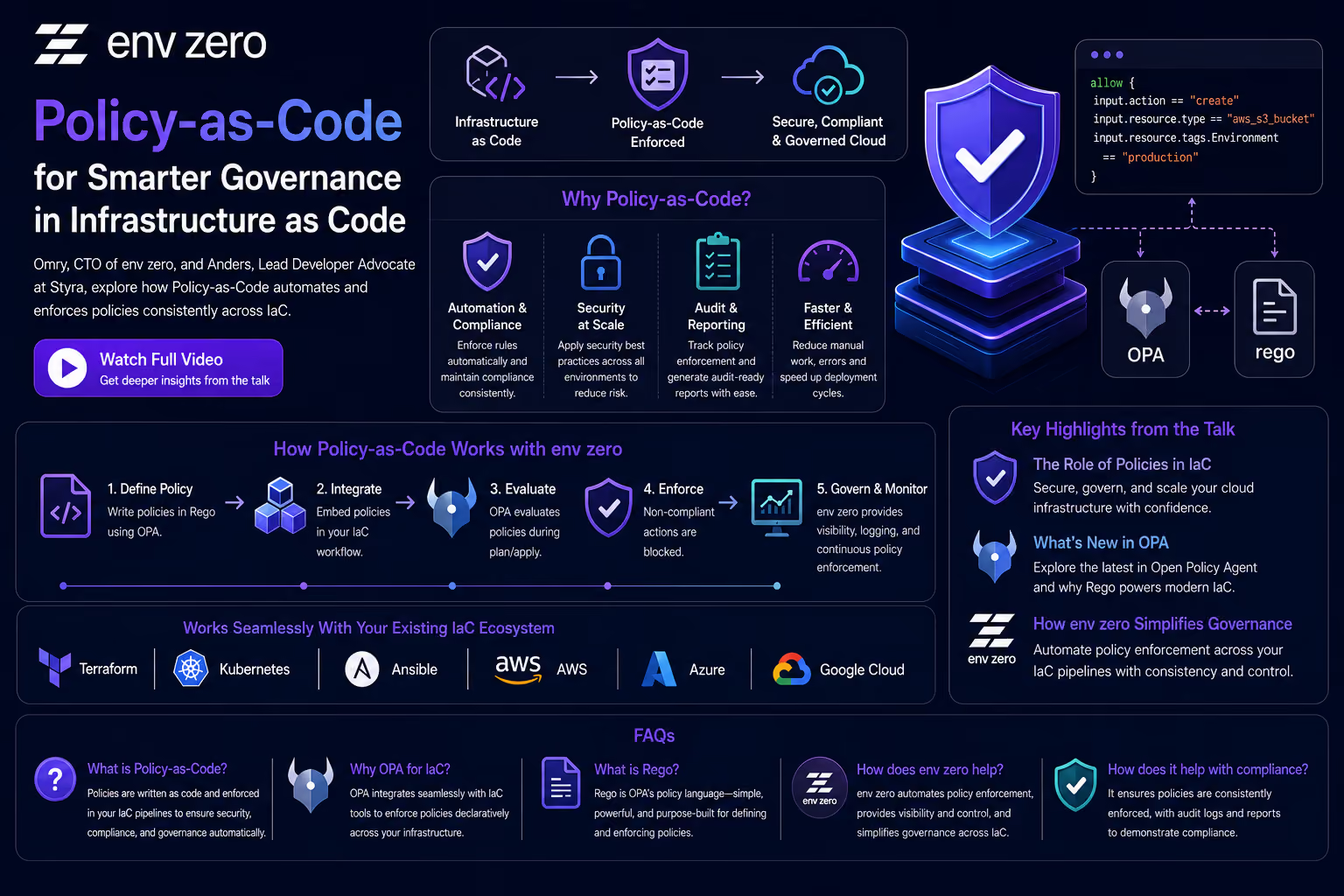
Policy as Code
Governance is enforced through policy engines such as Open Policy Agent (OPA).
Policies can validate:
- Security requirements
- Resource configurations
- Naming conventions
- Compliance standards
- Deployment approvals
This ensures infrastructure remains compliant regardless of who initiates deployments.
Pillar 2: Cost Management
Cloud costs can quickly spiral out of control without proper governance.
Mature Terraform automation platforms include:
Cost Estimation
Infrastructure changes are evaluated before deployment to estimate monthly costs.
Examples include:
- Kubernetes cluster costs
- Compute resource costs
- Storage costs
- Networking expenses
Budget Controls
Organizations can require approvals when deployments exceed predefined spending thresholds.
Automated Tagging
Consistent resource tagging enables:
- Cost allocation
- Budget tracking
- Chargeback models
- Automated resource management
Without automated tagging, cloud cost optimization becomes extremely difficult.
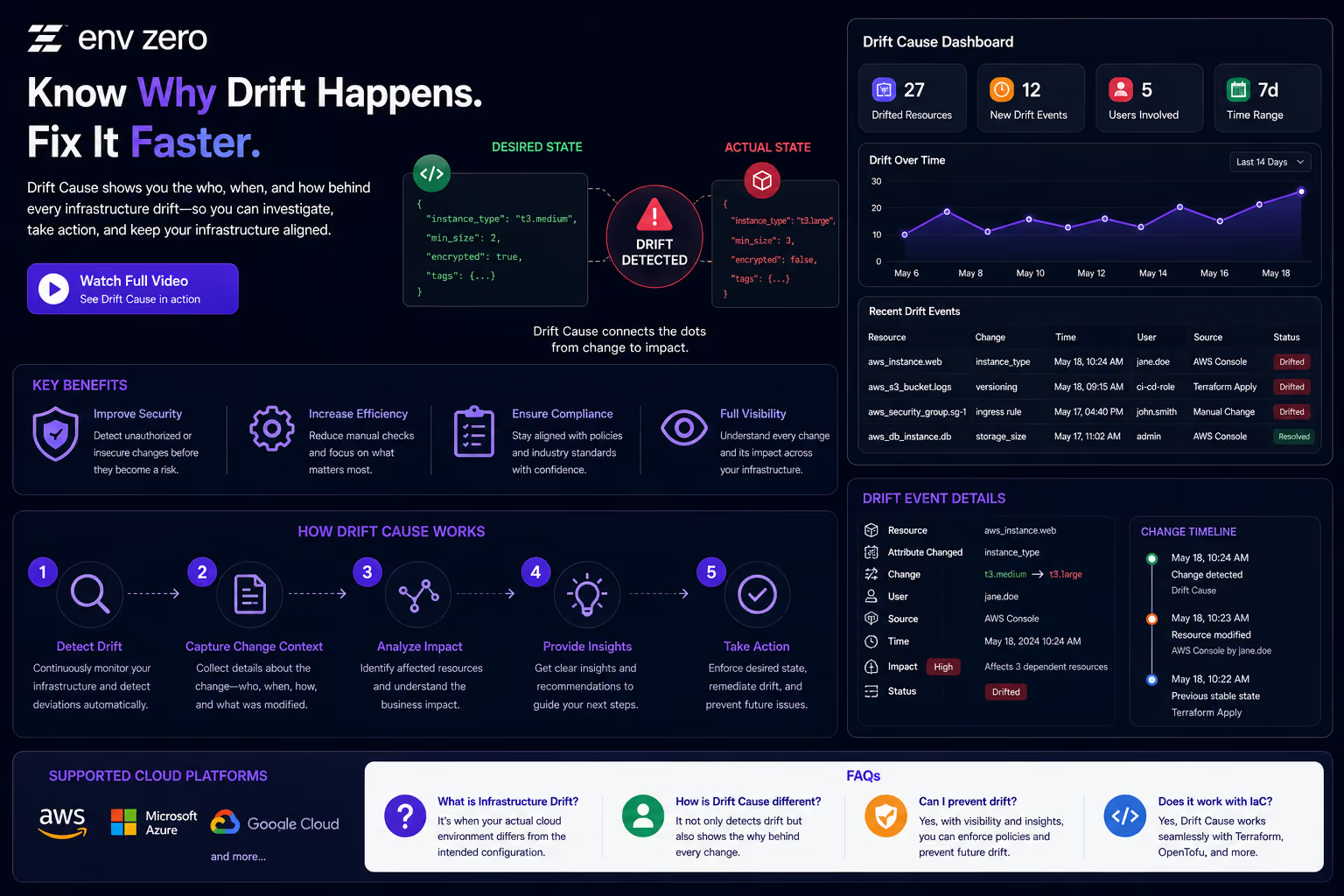
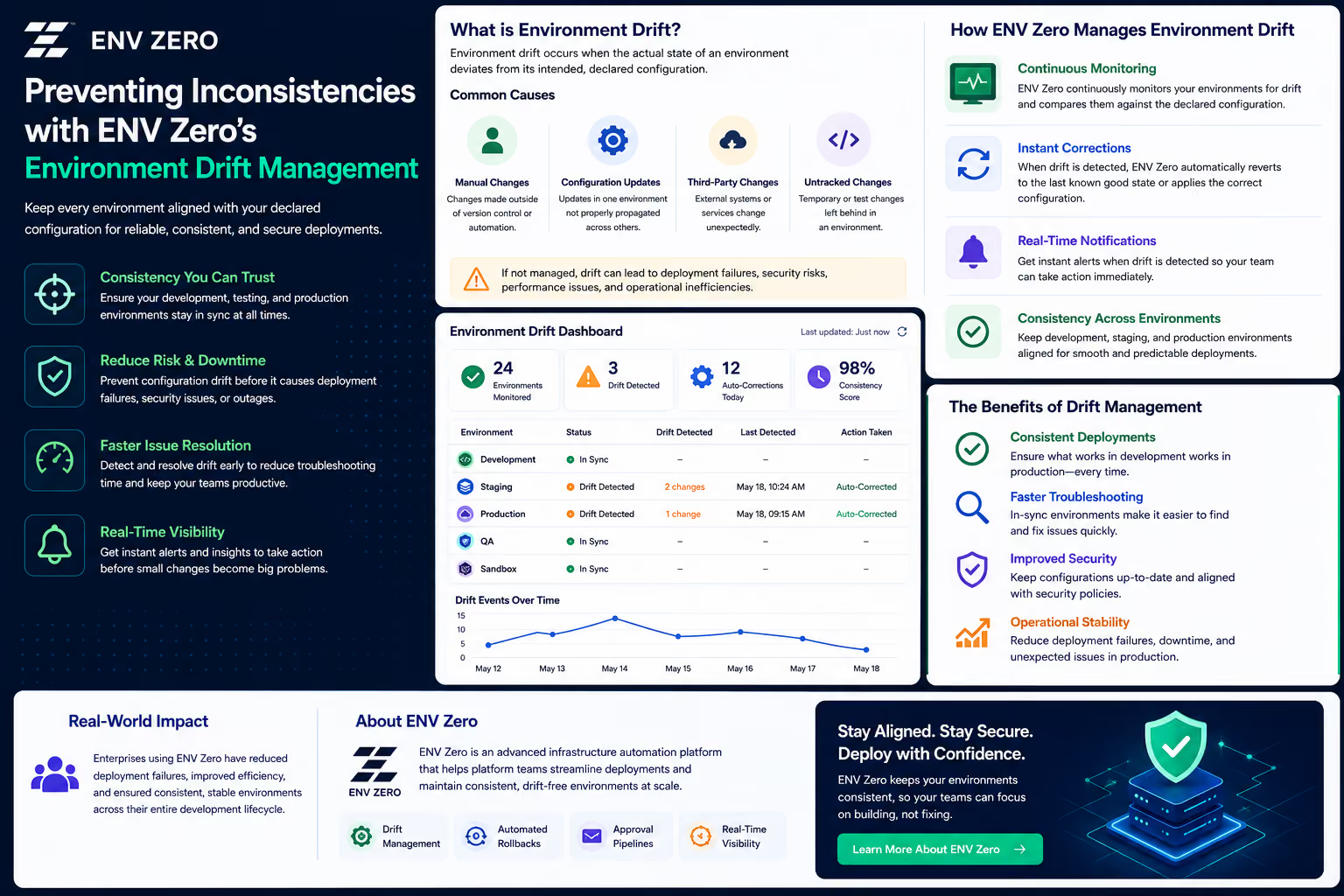
Pillar 3: Reliability Through Drift Detection
Configuration drift occurs when resources are modified outside Terraform.
Examples include:
- Manual console changes
- Emergency fixes
- Unauthorized modifications
- Accidental updates
Drift Detection
Automation platforms continuously compare actual infrastructure against Terraform state.
When differences are detected, teams are notified immediately.
Automated Remediation
Organizations can automatically correct specific types of drift while requiring approvals for more sensitive changes.
For example:
Automatically Remediate
- Resource tag updates
- Minor configuration adjustments
Require Approval
- Resource creation
- Resource deletion
- High-risk infrastructure modifications
This balanced approach improves reliability without introducing operational risks.
Real-World Example: Kubernetes Platform Deployment
A mature Terraform automation workflow might include:
Step 1: Networking Team
Creates and manages:
- AWS VPC
- Private subnets
- Routing infrastructure
Step 2: Platform Team
Deploys:
- Amazon EKS cluster
- Node groups
- Security groups
Step 3: Monitoring Stack
Automatically installs:
- Prometheus
- Grafana
Step 4: Governance Controls
Applies:
- Security scanning
- Cost estimation
- Policy enforcement
- Drift detection
The entire process becomes repeatable, secure, and largely self-service.
Benefits of Reaching Stage 4
Organizations that reach full Terraform automation maturity gain significant advantages:
Faster Deployments
Infrastructure can be provisioned in minutes instead of days.
Improved Security
Policies are automatically enforced across all deployments.
Reduced Operational Overhead
Automation eliminates repetitive manual tasks.
Better Cost Visibility
Teams understand infrastructure costs before deployment.
Enhanced Reliability
Drift detection ensures infrastructure remains aligned with approved configurations.
Greater Developer Productivity
Application teams can provision infrastructure without waiting for platform engineers.
Final Thoughts
Terraform automation is a journey rather than a destination. Most organizations begin with simple Git-based workflows and gradually evolve toward sophisticated self-service platforms with governance, security controls, cost management, and automated remediation.
The four stages of Terraform automation provide a roadmap for this progression:
- Basic Automation with Version Control Systems
- Infrastructure as Code Specialized Pipelines
- Advanced Terraform Orchestration
- Self-Service with Governance
Organizations that successfully navigate these stages can achieve faster deployments, stronger compliance, lower operational costs, and a significantly improved developer experience.
As cloud environments continue to grow in complexity, investing in Terraform automation maturity is becoming a critical component of modern platform engineering and DevOps success.