.svg)
Self-service infrastructure. Every framework. Every guardrail on.
Let developers and AI agents provision on demand across GitOps, CLI, and UI through golden paths that keep security, cost, and compliance enforced automatically, on every IaC framework you run.
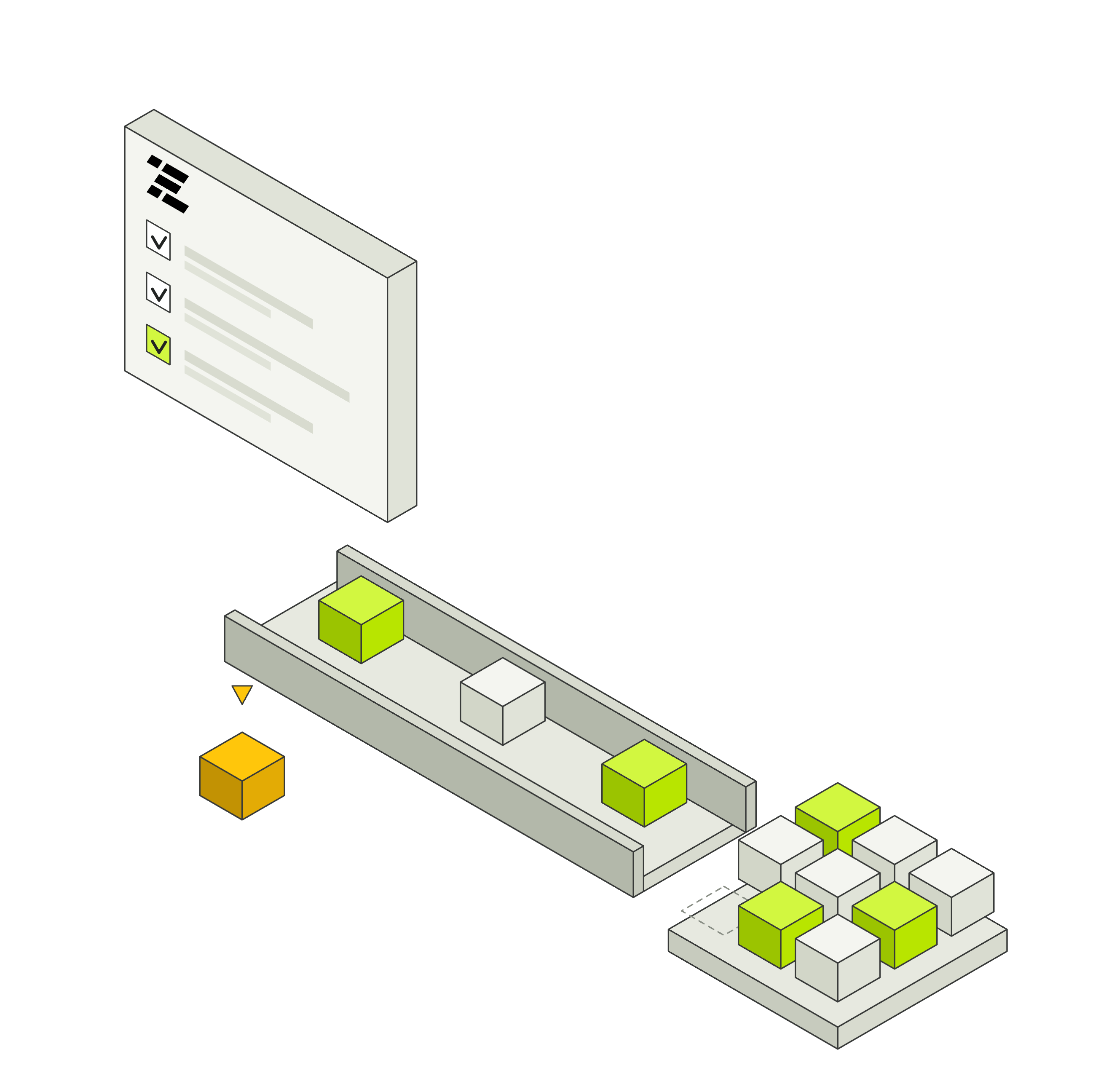




%25201.svg)







Why It Matters
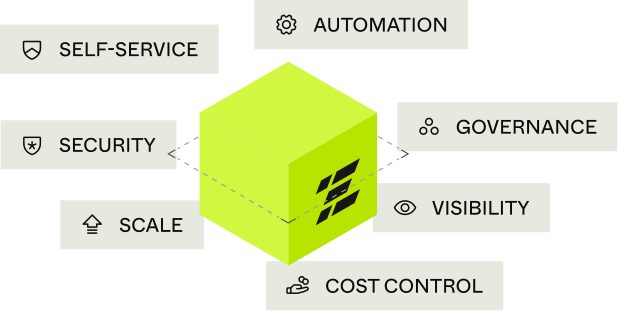
Give developers and DevOps the freedom to provision infrastructure on demand across GitOps, CLI, and UI, without waiting on a central team. The same governed surface is open to AI agents, so everything shipping into your cloud, human or machine, follows the same rules.
Platform-defined policies for security, cost, and compliance stay on by default, so autonomy never comes at the cost of control. Platform teams pave the golden paths. Developers—and their agents—follow them. Every deployment lands inside the same guardrails, across every IaC framework you run, so you scale infrastructure operations without scaling risk.

env zero provided us with a mature enterprise-ready solution, robust integration options, and an easy way to keep our costs under control.


Self-Service Is Essential. It Is Also Hard to Govern.
Engineering teams need fast access to infrastructure to stay productive. But most self-service is bolted onto a single IaC framework and governed by review — and as it spreads, platform teams lose the ability to enforce three things:
Real estates are never one tool. Terraform here, Pulumi there, Helm stitched together with brittle CI/CD glue that one person understands. Every team wires it up its own way, configurations drift apart, and the platform team becomes the bottleneck reviewing it all.
Manual approval gates slow everyone down and still miss things. Policy enforced by human review is policy that fails under load, and it can't keep pace with agents shipping changes faster than anyone can read them.
Ungoverned self-service spins up resources no one tracks. Spend climbs, and no one owns the cleanup.
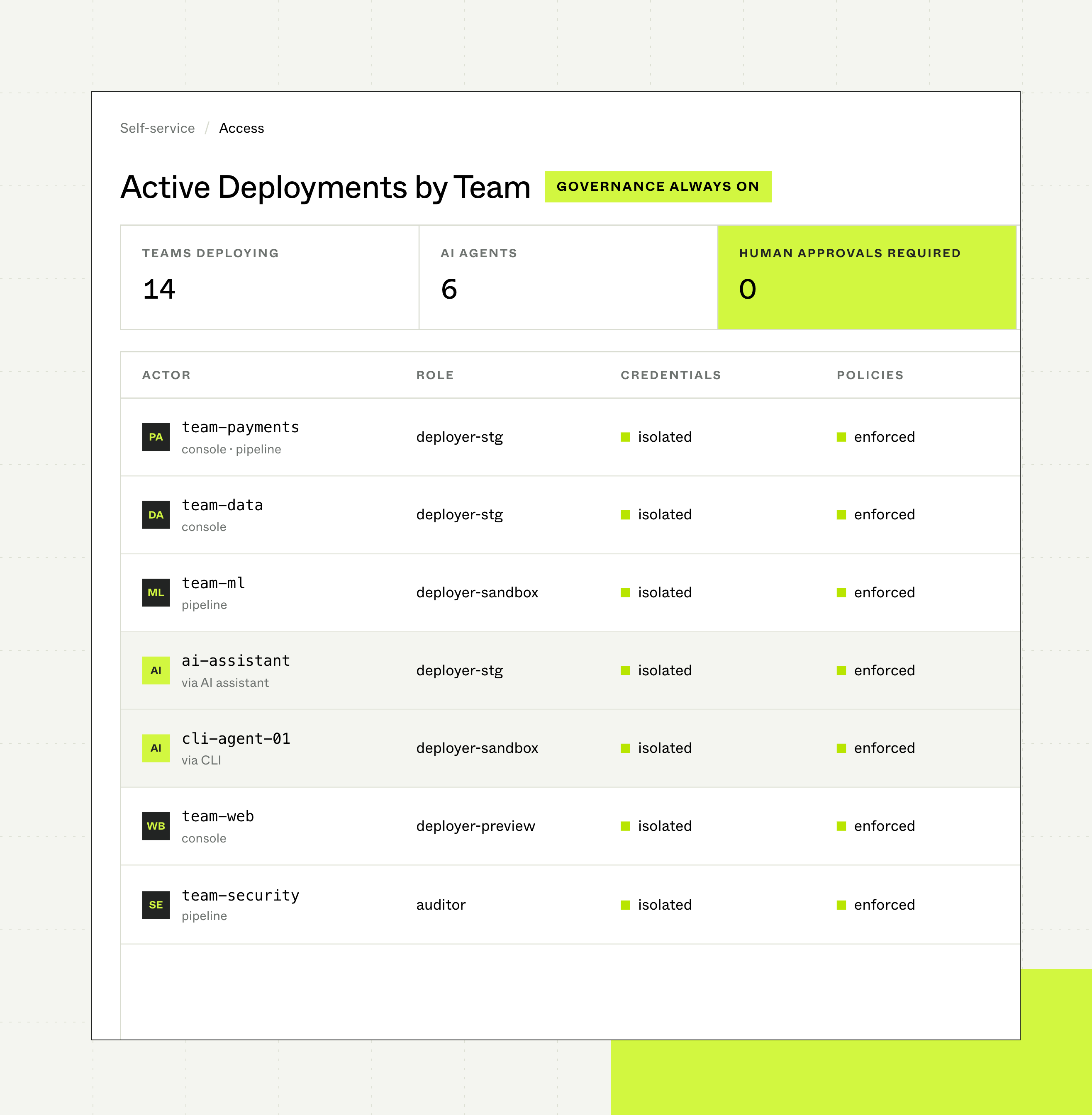

Put the Guardrails in the Workflow, Not in a Review Queue.
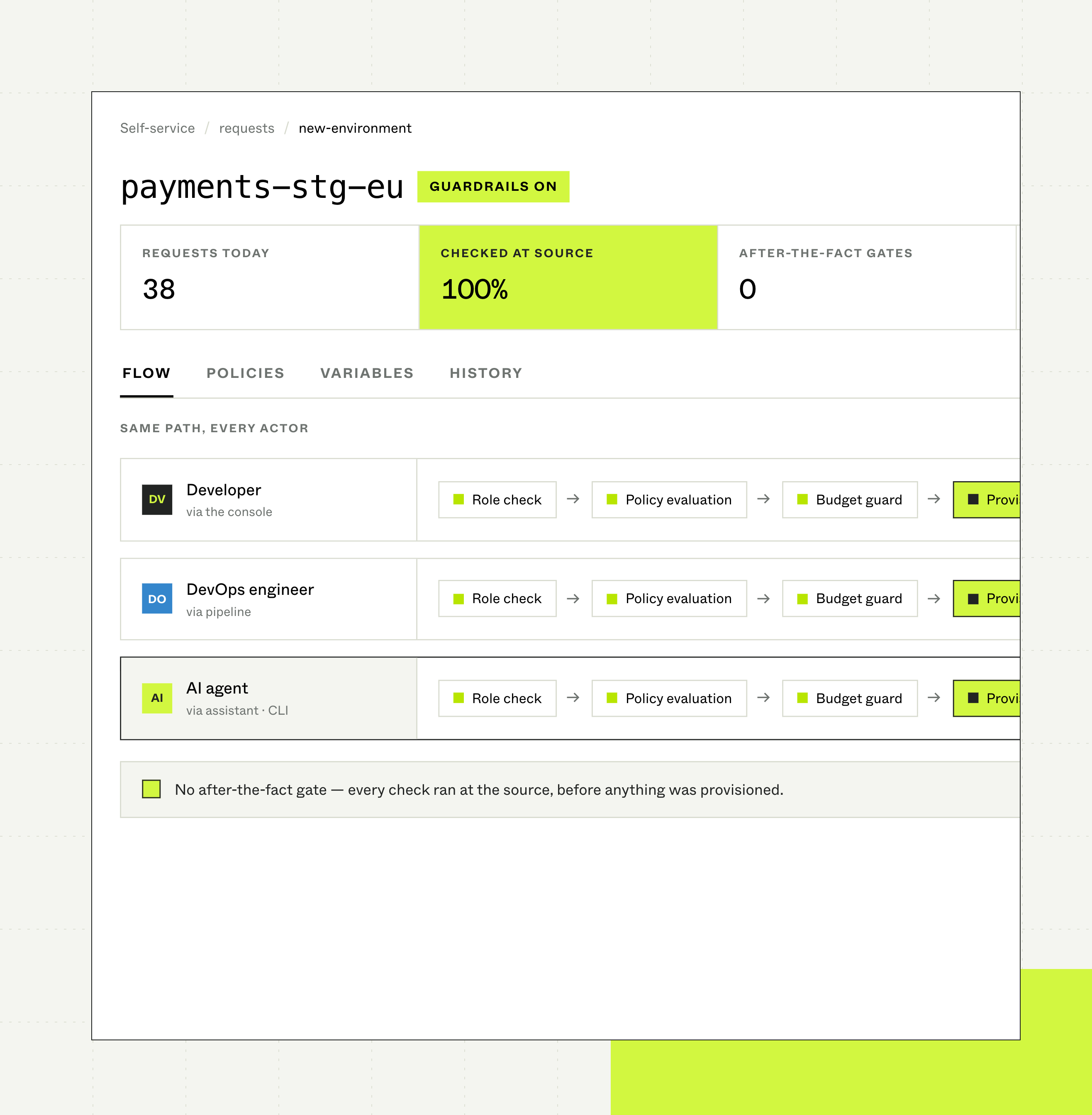
env zero embeds governance directly into the self-service flow. Instead of gating deployments after the fact, it enforces standards at the source—the same way for a developer, a DevOps engineer, or an AI agent.


What We Deliver

.avif)
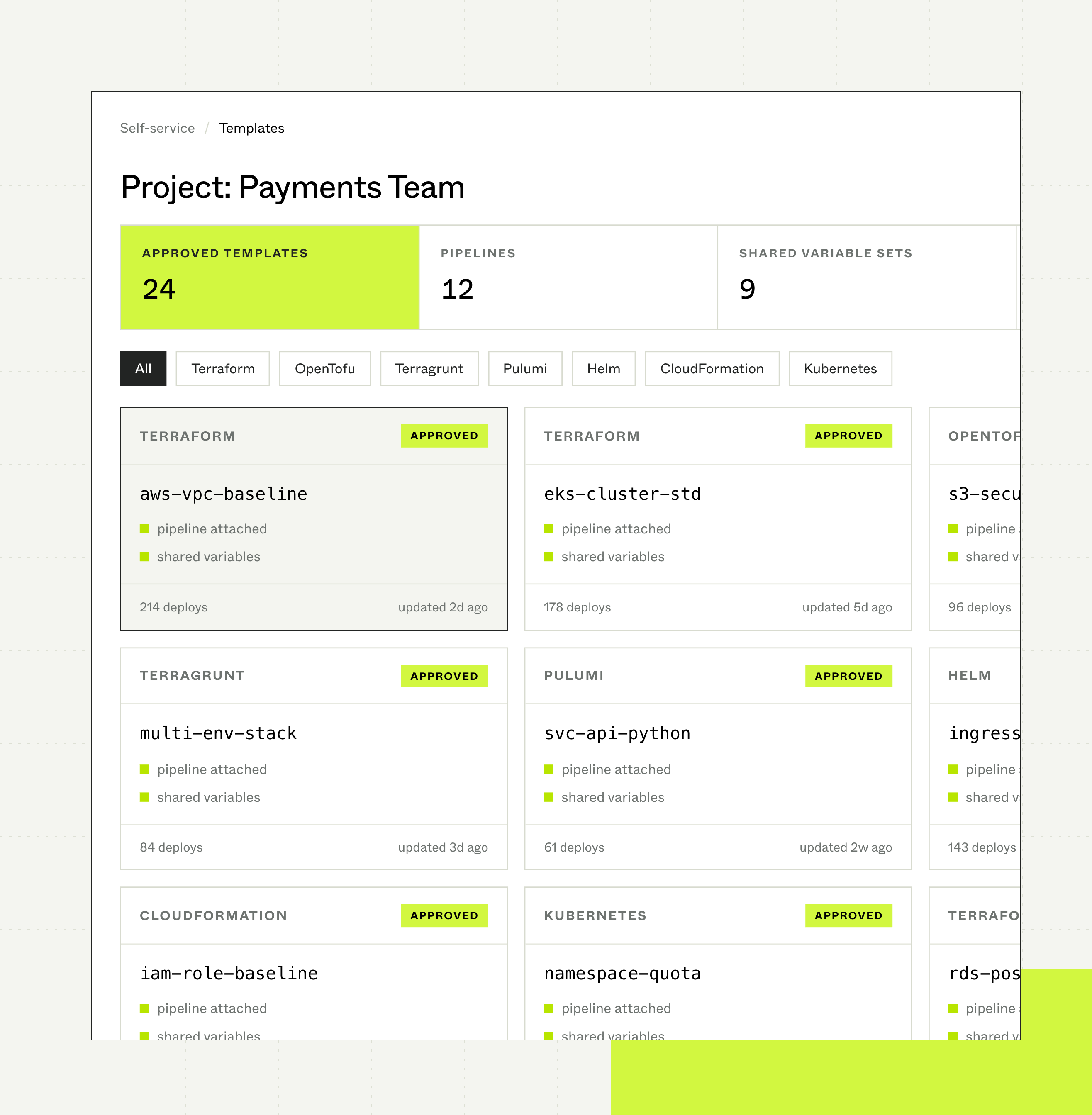
Pave the golden path with pre-defined pipelines, reusable templates, and shared variables. Spin up on-demand ephemeral environments to lift velocity at minimal cost.
.avif)
Enforce security, cost, and compliance rules automatically on every deployment. Move fast without breaking things, and skip the back-and-forth.
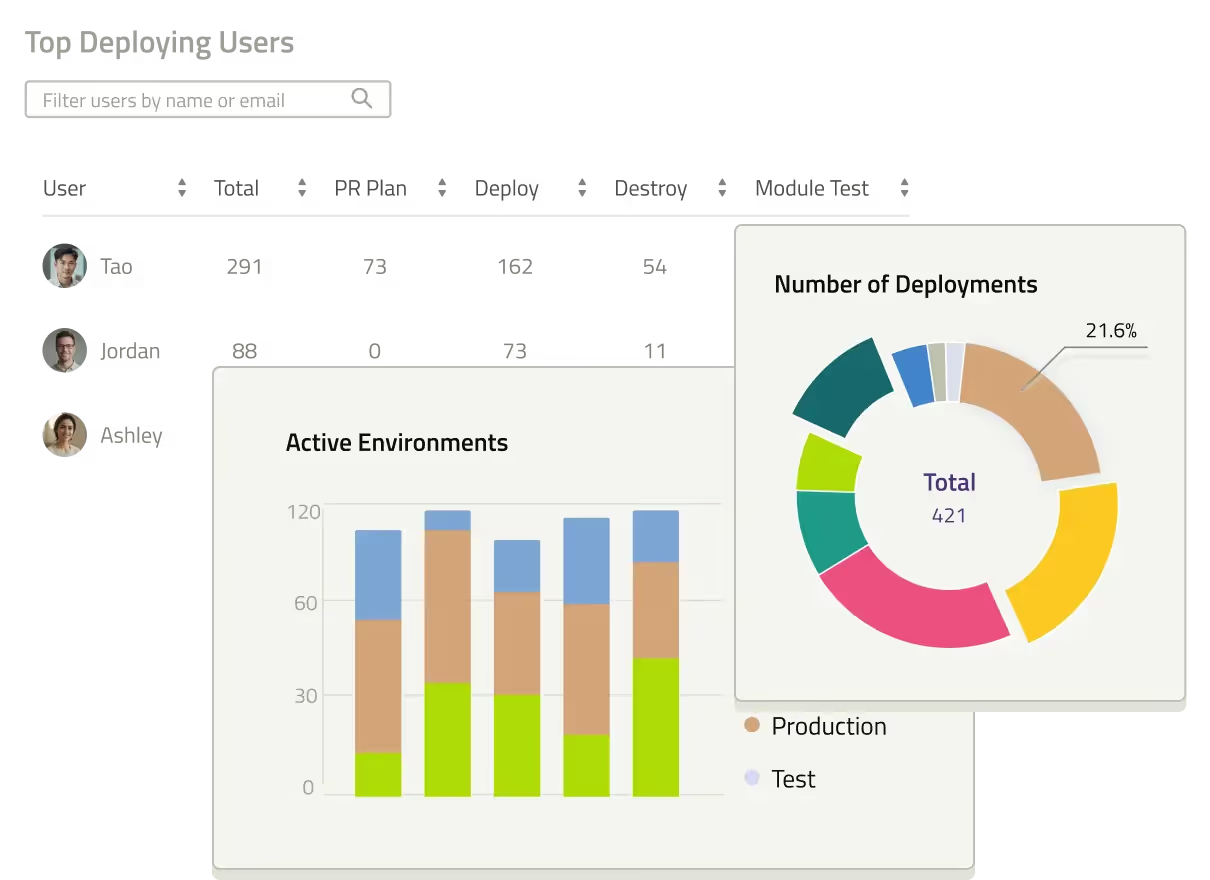
Catch changes that happen outside the workflow before they cause an incident, with alerts routed to the teams that own them.

Define roles, privileges, and approval flows with multi-level project and environment controls. Onboard new users through SSO via SAML or OIDC.
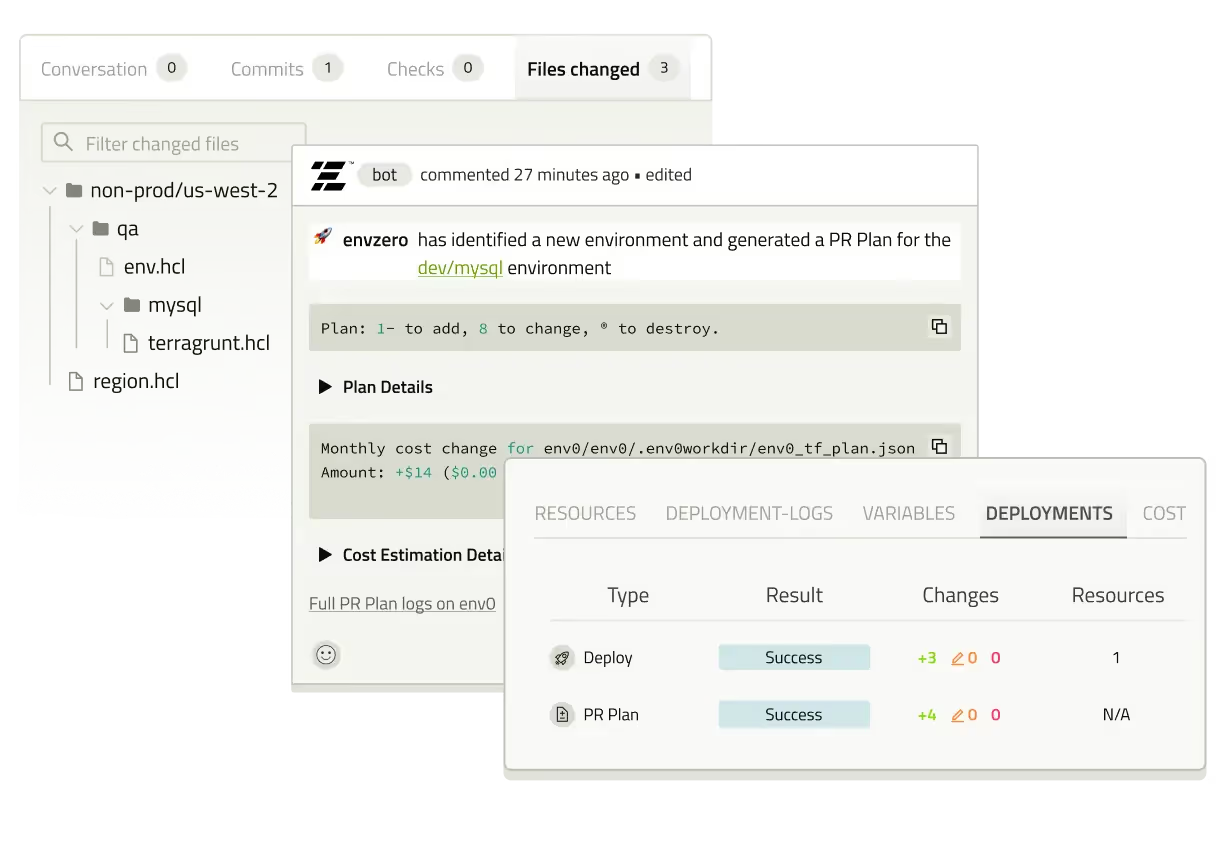
Plan and apply directly from pull requests with an Atlantis-like flow, and auto-update environments as the repo changes with Environment Discovery.

The Impact
With guardrails embedded in the self-service flow, teams get autonomy and control at once:
Virgin Media shapes their POCs and dramatically cuts deployment times
Virgin Media O2’s Digital Security Team uses Google Cloud Platform to deploy and manage multiple proof of concept (POC) environments that they use to test new architectures, applications, and capabilities for their growing company.

Frequently asked
questions.
It gives developers, DevOps teams, and AI agents the freedom to deploy infrastructure on their own through GitOps, CLI, or UI, while platform-defined policies for security, cost, and compliance stay enforced automatically. You get autonomy and control at the same time, instead of trading one for the other.
Yes. Golden-path templates span Terraform, OpenTofu, Terragrunt, Pulumi, Helm, CloudFormation, and Kubernetes—one control plane over every framework you already run, with a dedicated migration path for workspaces, state, and variables. You don't have to standardize on a single tool to get governed self-service.
Golden paths are pre-approved templates, pipelines, and variables that platform teams define once. Developers follow them to deploy consistently, which prevents config sprawl and keeps every environment aligned to standard.
Policies are defined as code and checked on every plan, before anything is provisioned. Combined with auto-drift detection, the platform catches both non-compliant changes at deploy time and changes made outside the workflow afterward.
Not when it runs through approved roles, templates, and policies. Deployments stay governed by default, so teams move quickly without spawning untracked, ungoverned resources—and drift made outside the workflow is caught automatically.
Ready to Migrate with Confidence?
Take the next step toward a more governed, scalable, and efficient cloud environment.
Don't see what you need?
Request an integration, tell us what we're missing.
.svg)